
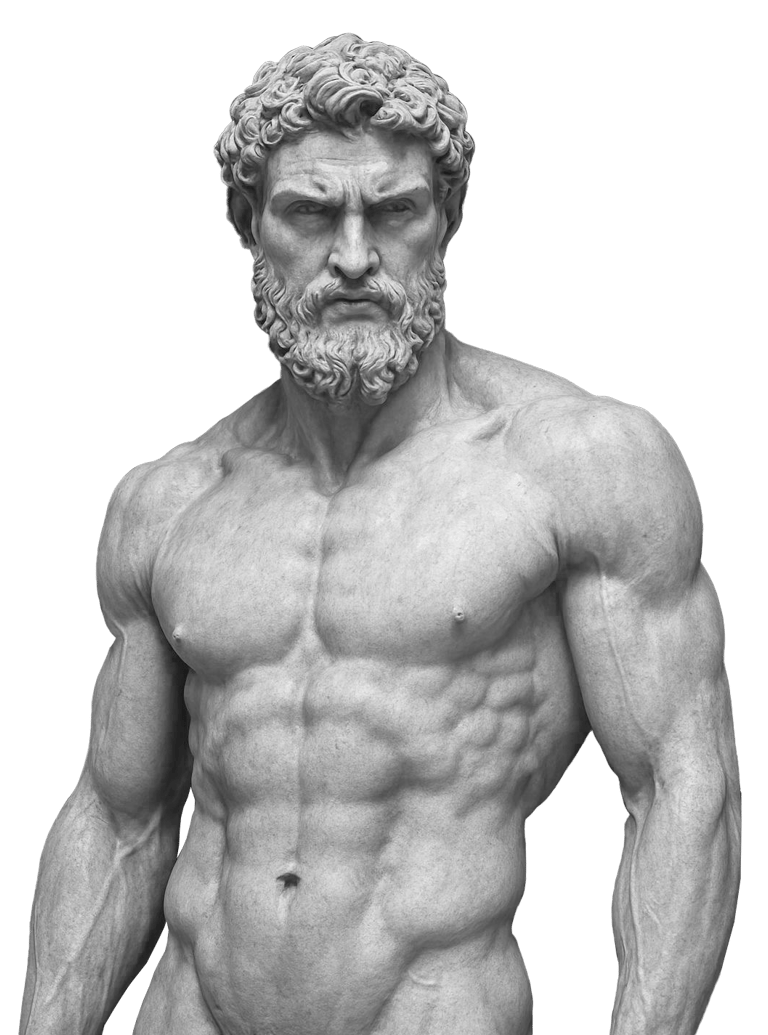
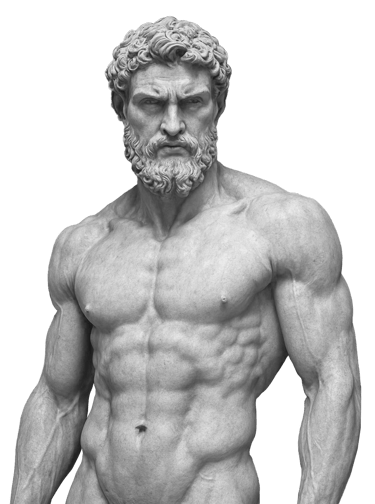
Anatomy
DESIRE
of
THE EVOLVING VISAGE OF THE MALE BODY IN ART
by Sezer Ali | MAY 8, 2025 | ART & IDENTITY
A JOURNEY THROUGH HISTORY, PERCEPTION, AND THE EVOLVING ICONOGRAPHY OF MAN
For millennia, the sculpted body of the male form has exemplified ideas of beauty, power, and heroism throughout the Western creative heritage. From the sculpted deities of ancient Greece to Michelangelo's Renaissance David, artists have methodically depicted the male form, reflecting cultural ideals and aesthetic values. My initial experiences as a student at an art high school in Bulgaria, where the intensive study of plastic anatomy through the depiction of the human form was pivotal to our artistic growth, sparked a profound interest in the visual perception of the body and the messages it communicates as a form. During this period, I first encountered the depth and complexity of this subject through translated pieces in Bulgarian periodicals, particularly the profound work of Igor Semyonovich Kon on the male physique. Kon's viewpoint really influenced me, initiating a personal research venture that has culminated in this investigation.
This article will explore the intricate history of the male body as an artistic subject, examining its progression from idealized forms that represent cultural values to more nuanced and varied depictions that contest conventional norms and reflect evolving societal perceptions of masculinity, sexuality, and gaze. Through a curated selection of artworks and artists—spanning different time periods, styles, and cultural contexts—the aim is not to present an exhaustive survey, but rather to highlight key examples that offer meaningful insight into the shifting iconography of the male figure. While many compelling works remain beyond the scope of this article, the choices included here seek to illuminate the broader trajectory and complexity of this enduring theme.
This examination will elucidate the lasting importance of the masculine form as a medium of artistic expression and cultural significance by scrutinising pivotal historical epochs and artistic movements in conjunction with contemporary viewpoints.
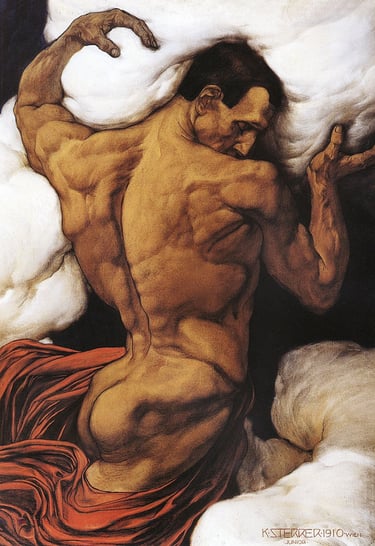
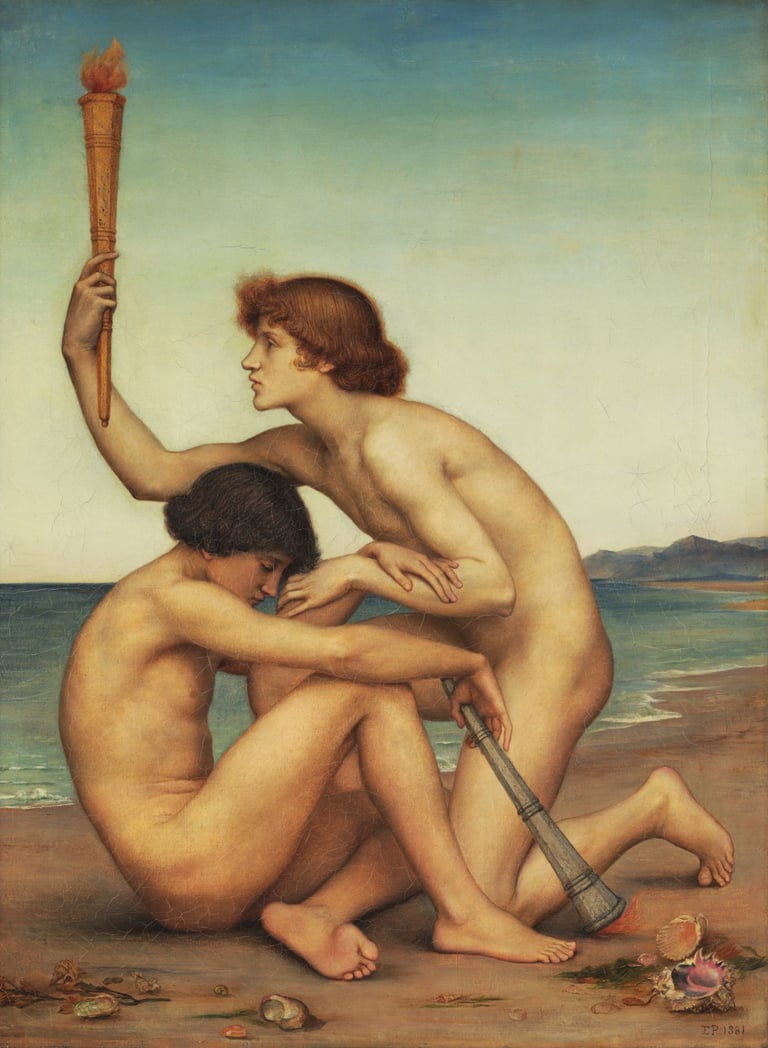
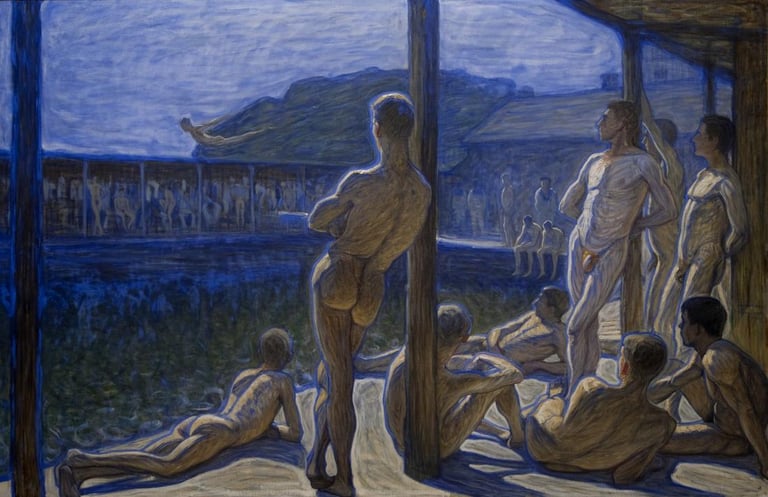
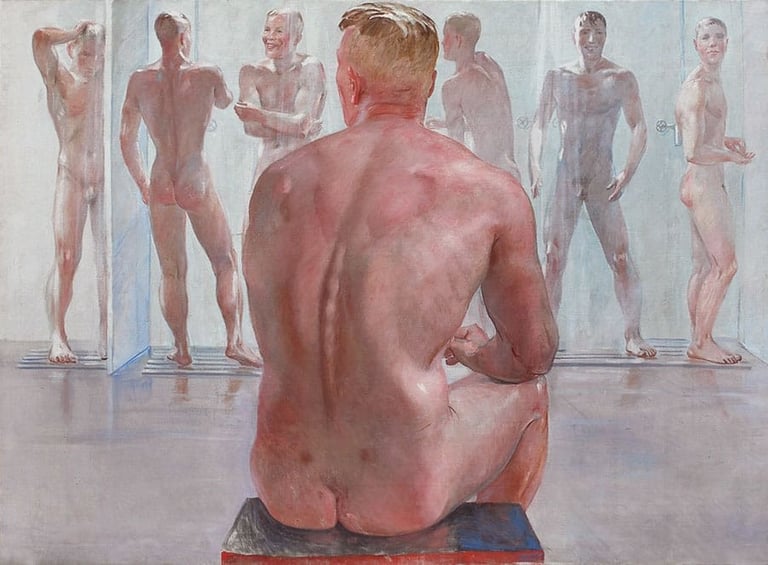
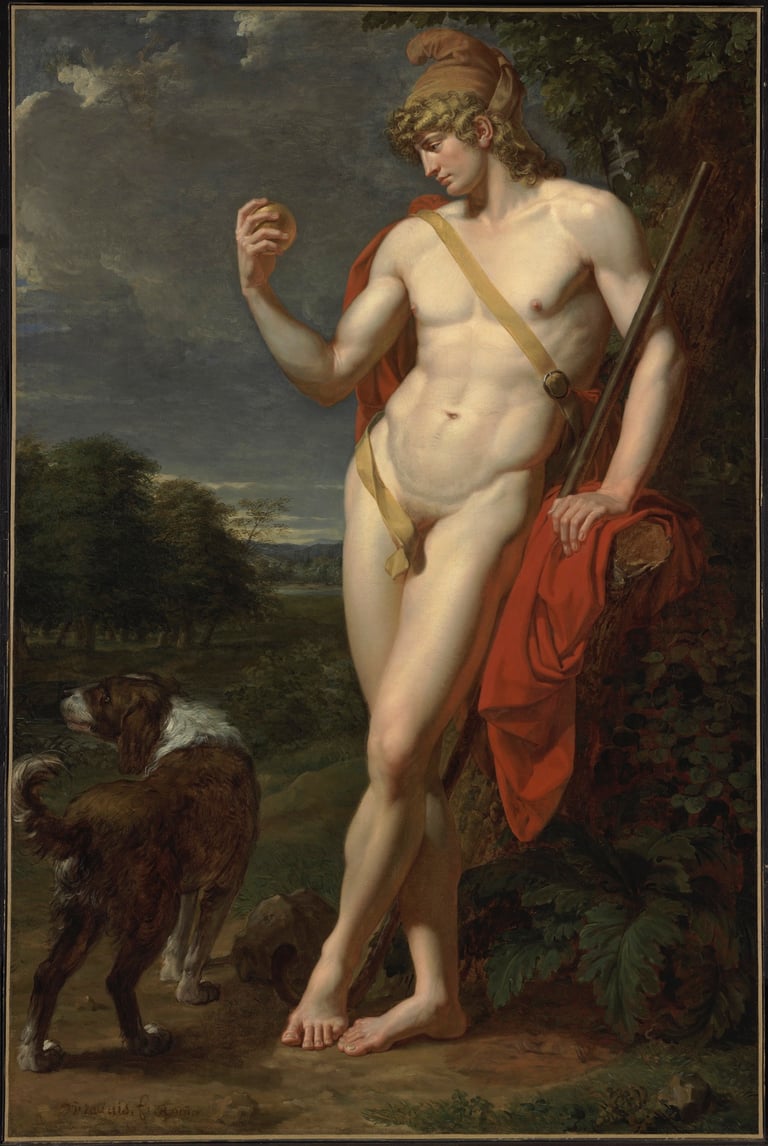
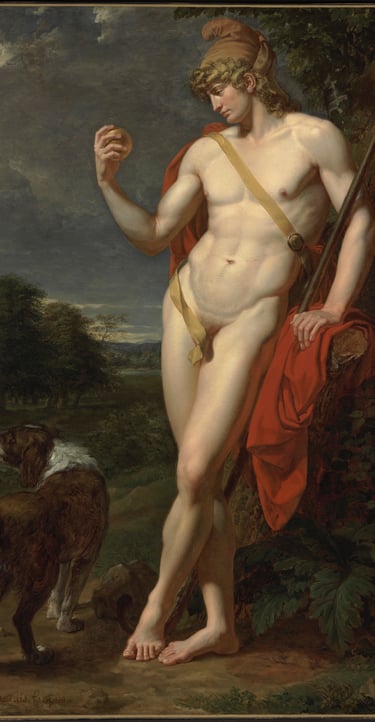
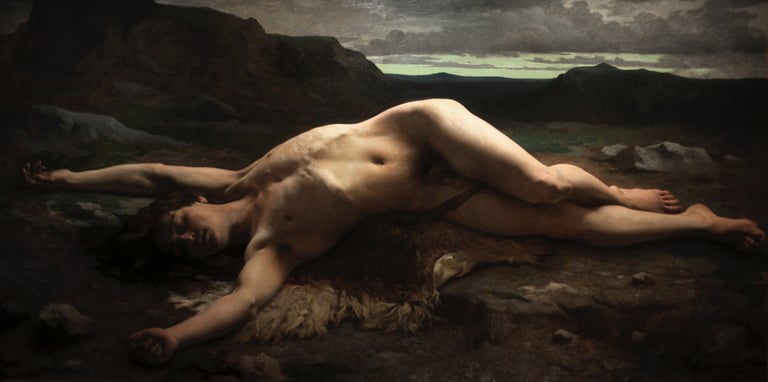
Fig. 1. Paul Cadmus, The Bath (c. 1951)., Fig. 2. Karl Sterrer, Atlas (date unknown)., Fig. 3. Evelyn De Morgan, Phosphorus and Hesperus (1882)., Fig. 4. Eugène Jansson, The Navy Bathhouse (1907)., Fig. 5. Aleksandr Deyneka, After the Battle (1944)., Fig. 6. Jean-Baptiste Frédéric Desmarais, Le Berger Pâris (18th century)., Fig. 7. Edvard Munch, Bathing Men (1907–1908)., Fig. 8. Camille Félix Bellanger, Abel (c. 1874)., Fig., 9. Yaroslav Sobol, Nude Male Model (date unknown).
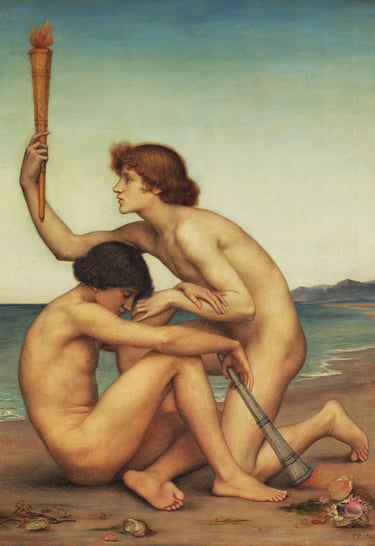
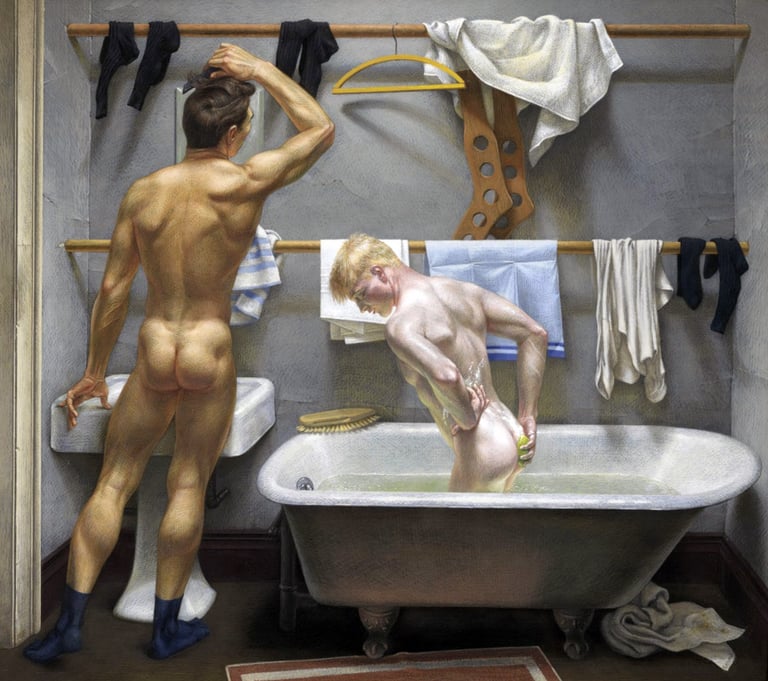
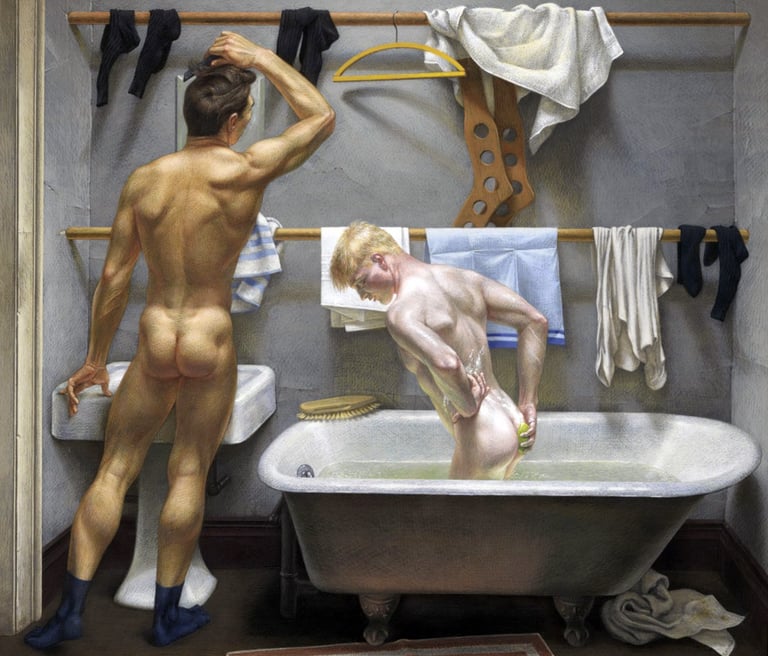
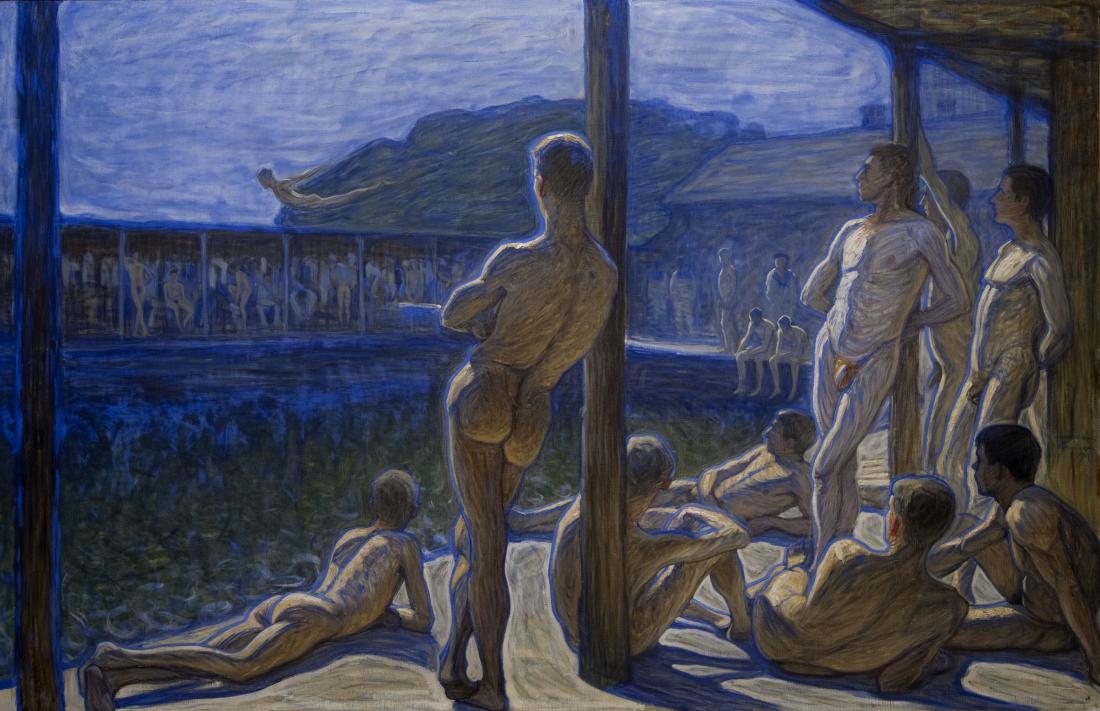
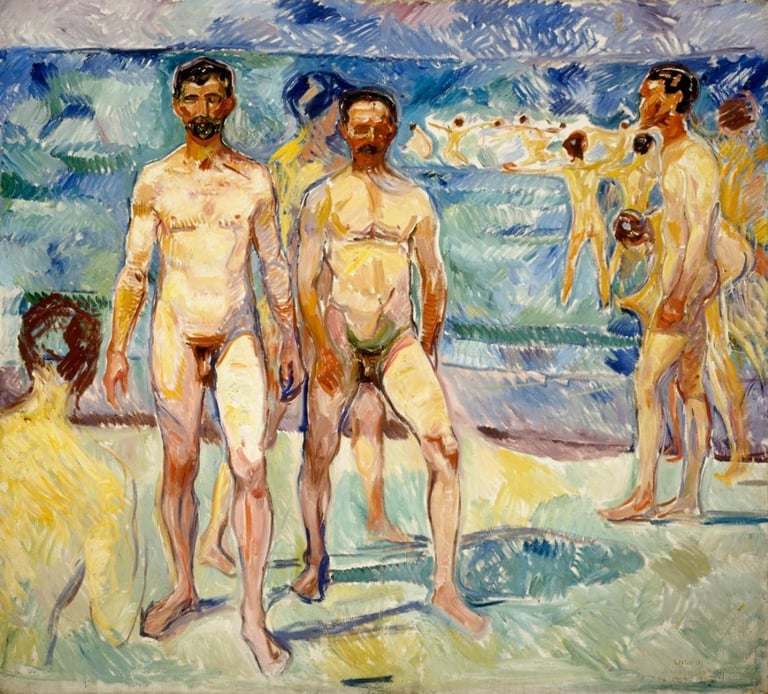
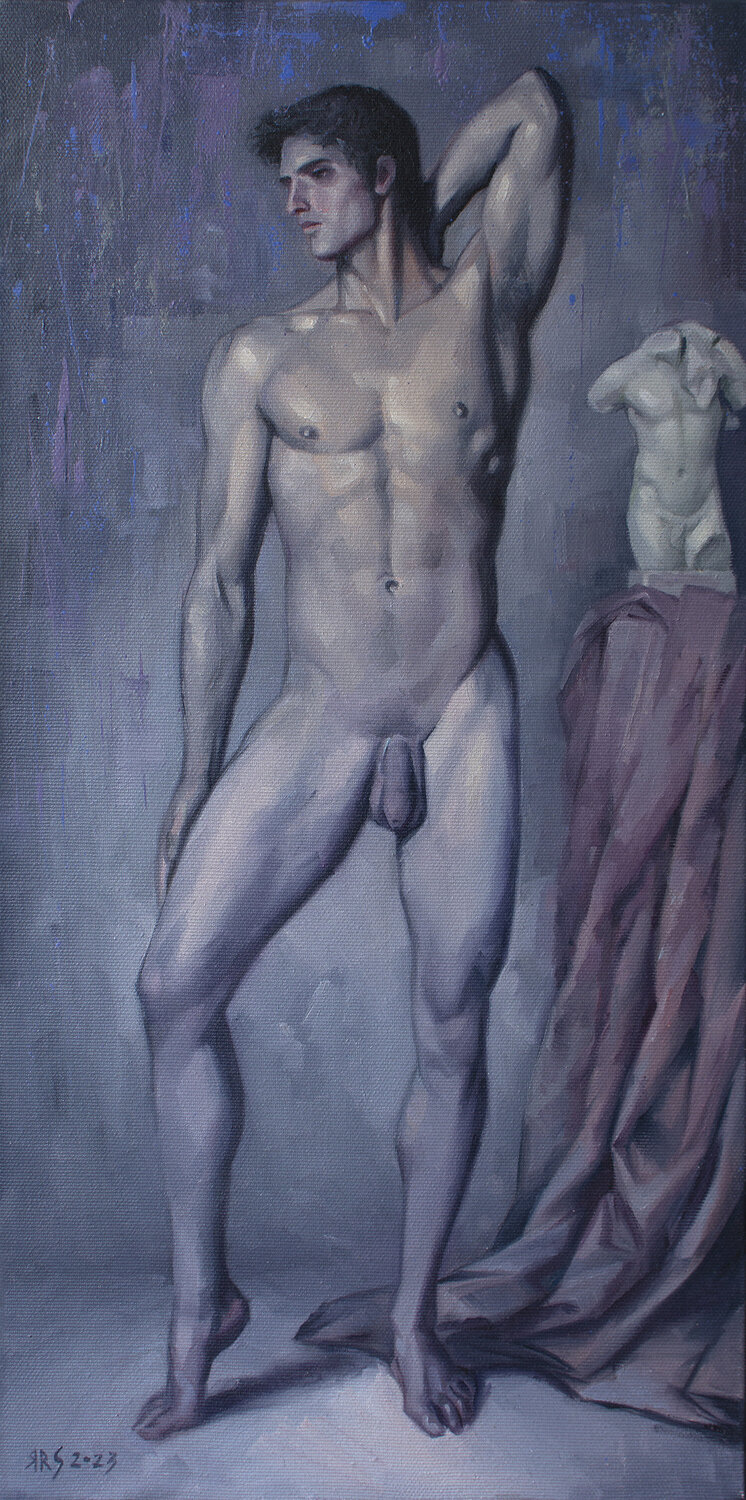
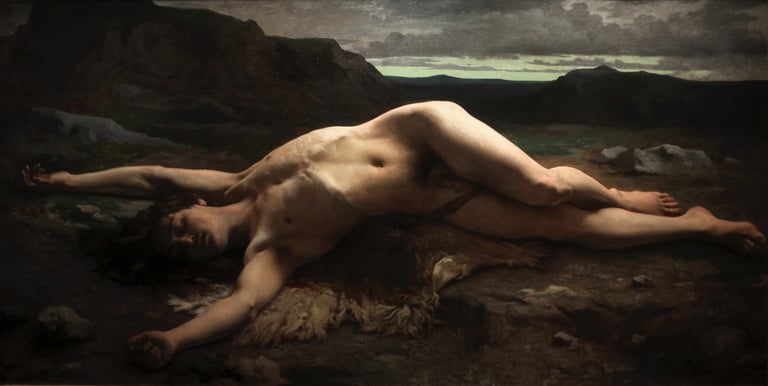
The representation of the male physique in art is a tradition that dates back to the first human expressions, growing alongside cultural values and aesthetic principles. Analysing these historical depictions uncovers both artistic norms and the societal notions of masculinity and power they frequently reflect. The legacy of classical ideals endured during the Renaissance, although artists simultaneously ventured into new interpretations of the male body. Michelangelo's David (1501–1504), although grounded in classical contrapposto and heroic nudity, exhibits a discernible tension and psychological profundity that sets it apart from its ancient forerunners (Hartt & Wilkins, 2013, p. 355). The concentrated look and composed posture indicate an inner strength and determination, transcending simple physical perfection. In the religious narratives of the period, exemplified by Leonardo da Vinci’s The Last Supper (c. 1495–1498), the male body is employed to express a spectrum of emotions and spiritual importance through gesture and posture.
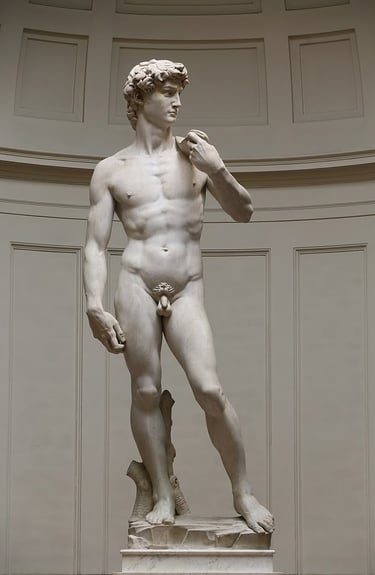
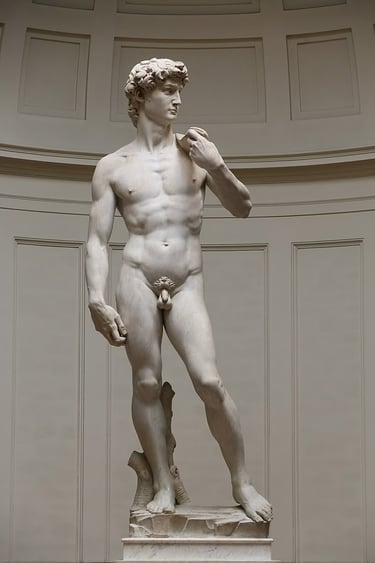
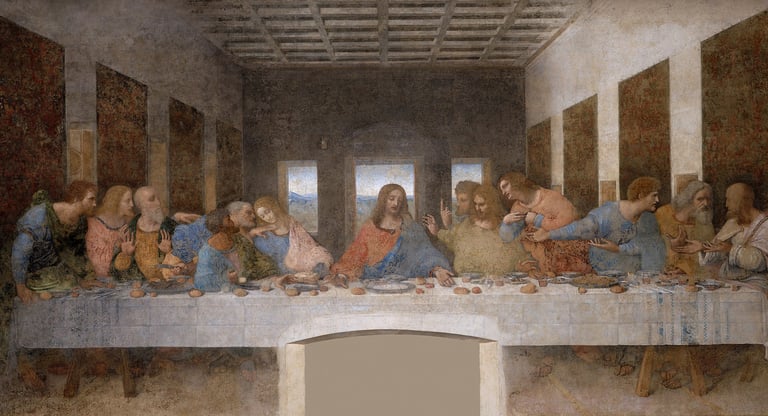
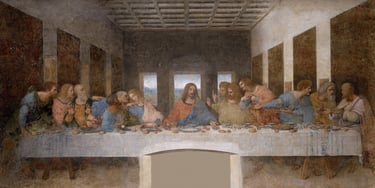
Fig. 10. Michelangelo, David, 1501–1504. Marble, Galleria dell’Accademia, Florence.
Fig. 11. Leonardo da Vinci, The Last Supper, c. 1495–1498. Mural, Santa Maria delle Grazie, Milan.
HISTORICAL REPRESENTATION
THE CLASSICAL IDEAL
The artistic expressions of ancient Greece and Rome created a powerful and lasting model of the male physique. Sculptures like the Doryphoros by Polykleitos and the subsequent Apollo Belvedere exemplify an idealized physique marked by harmonious proportions, muscular musculature, and a sense of heroic nudity (Clark, 1976, p. 18). Kenneth Clark, in his influential work The Nude: A Study in Ideal Form, contends that the Greek nude transcended mere portrayal of the human figure, serving as an embodiment of intellectual and spiritual ideals that express a belief in human potential and logical order (Clark, 1976, pp. 18–25). These sculptures frequently fulfilled religious or civic purposes, depicting deities, athletes, and heroes, thus associating the idealized masculine physique with concepts of divinity, excellence, and civic virtue (Pollitt, 1986, p. 67).
This ancient lineage is reflected in 19th-century masterpieces like Hippolyte Flandrin's Nude Youth Sitting by the Sea (c. 1836), where the solitary male figure embodies the tranquility and contemplation characteristic of Hellenistic sculpture. His stance and reflective look resonate with the enduring attributes of the Greek ideal, reconstructed through Romantic sensibilities.
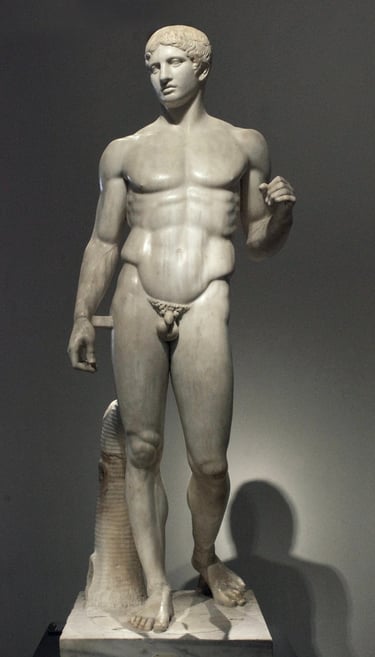
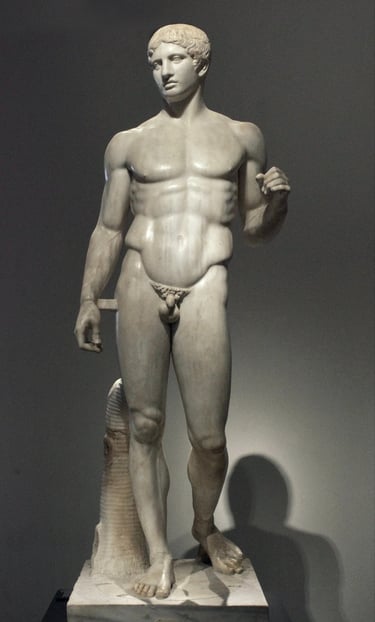
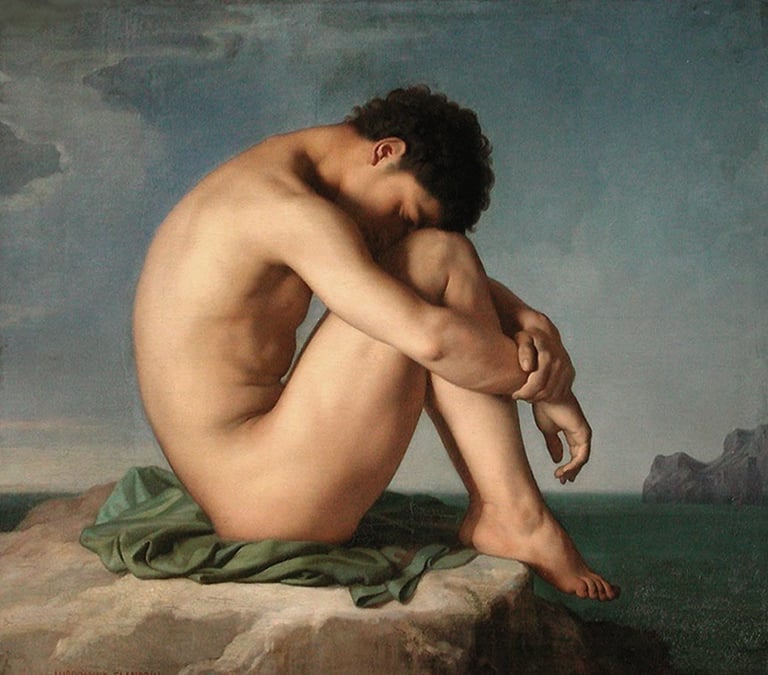
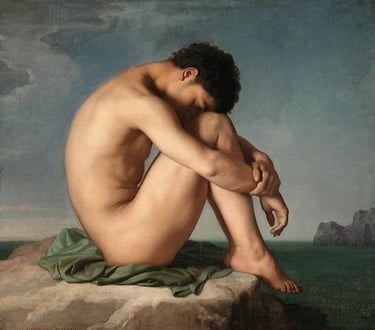
Fig. 12. Polykleitos, Doryphoros (Spear Bearer), c. 440 BCE. Roman marble copy after a Greek bronze original. Museo Archeologico Nazionale, Naples.
Fig. 13. Hippolyte Flandrin, Nude Youth Sitting by the Sea, c. 1836. Oil on canvas, Louvre Museum, Paris.
RENAISSANCE AND SUBSEQUENT ERAS
The Renaissance had a resurgence of classical ideals, with painters such as Michelangelo significantly influenced by antique sculpture. David exemplifies a comparable focus on muscularity and heroic nudity, however infused with an intensified psychological depth (Hartt & Wilkins, 2013, p. 355). The Renaissance also presented the masculine body in novel contexts, such as religious narratives and portraiture, illustrating a wider spectrum of human experiences and unique identities (Cole, 2017, p. 142).
This era esteemed academic drawing as a means of studying human anatomy. The Academy Drawing of a Man, attributed to Patroclus by Jacques-Louis David, provides a significant perspective on this educational emphasis. The figure, meticulously crafted via anatomical study, functions as both an intellectual endeavour and a representation of idealised masculinity associated with heroism and classical mythology.
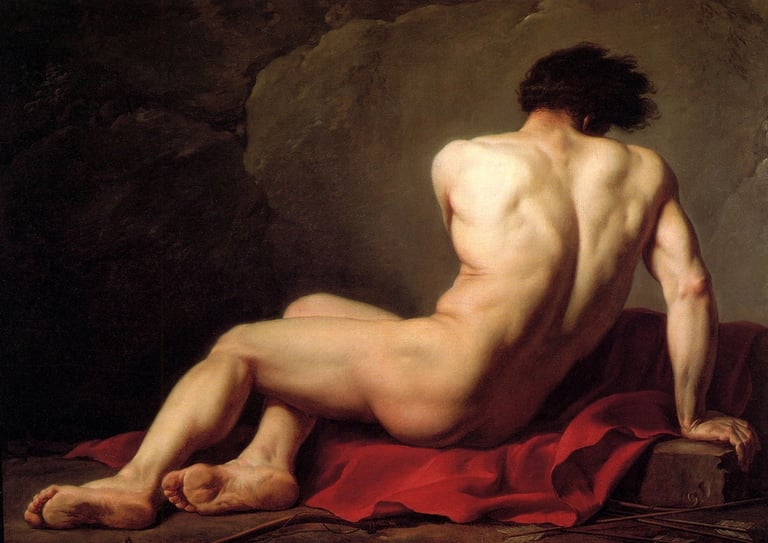
Fig. 14. Jacques-Louis David, Patroclus, 1780. Oil on canvas, 121.5 × 170.4 cm. Musée Thomas-Henry, Cherbourg, France.
A Neoclassical study of the male nude, this painting depicts Patroclus with his back turned, emphasizing anatomical precision and stoic repose. The absence of facial features directs focus to the idealized form, reflecting David’s engagement with classical themes and aesthetics.
THE BAROQUE PERIOD
The Baroque period, approximately in the 17th century, initiated a transition towards more dynamic and dramatic portrayals of the male physique. Artists such as Peter Paul Rubens portrayed male figures with pronounced muscle in dynamic poses, highlighting physicality and emotional fervour (Alpers, 1983, p. 119). Bernini's David (1623–1624) presents a stark contrast to Michelangelo's, depicting the biblical hero in the dynamic moment of hurling his stone, his physique imbued with vigour and resolve (Wittkower, 1993, p. 255).
Jules-Élie Delaunay's Ixion Thrown into the Flames (about 1876) echoes this Baroque drama, depicting mythological retribution through a vivid representation of the human form in agony. The dynamic musculature and twisted form evoke the theatrical expressiveness of older Baroque sculpture while embodying 19th-century Romantic preoccupation with myth and suffering.
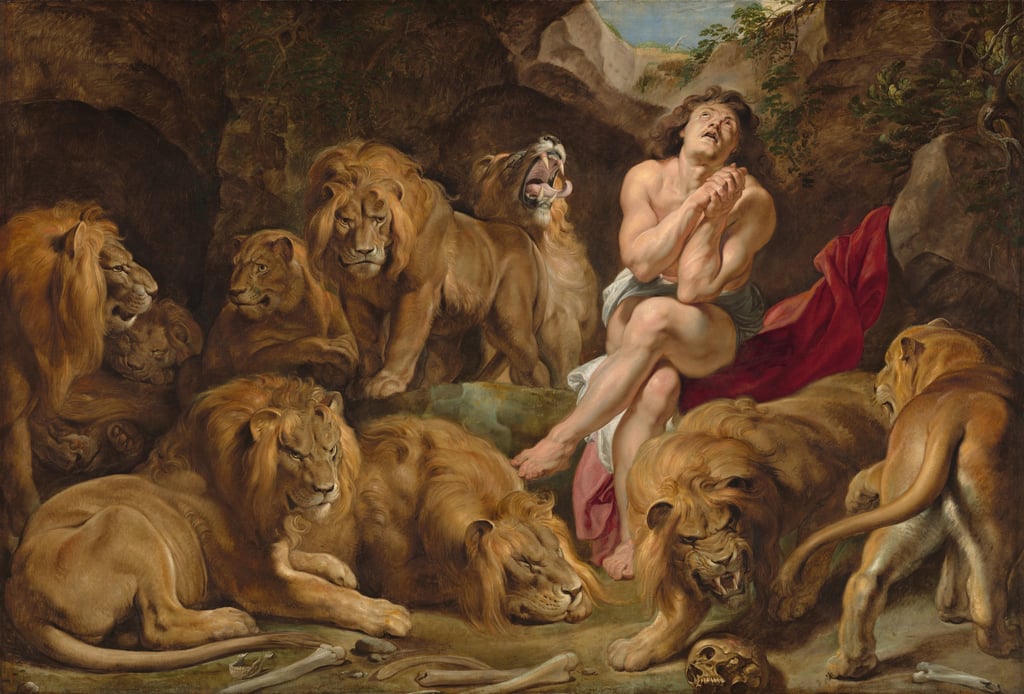
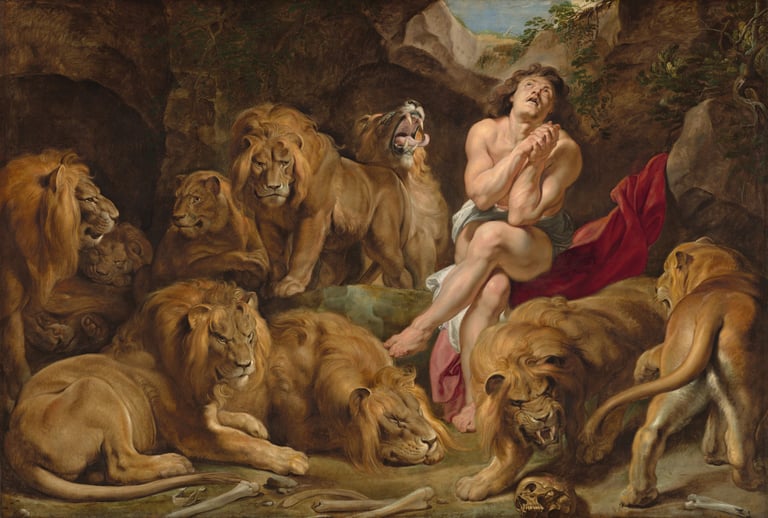
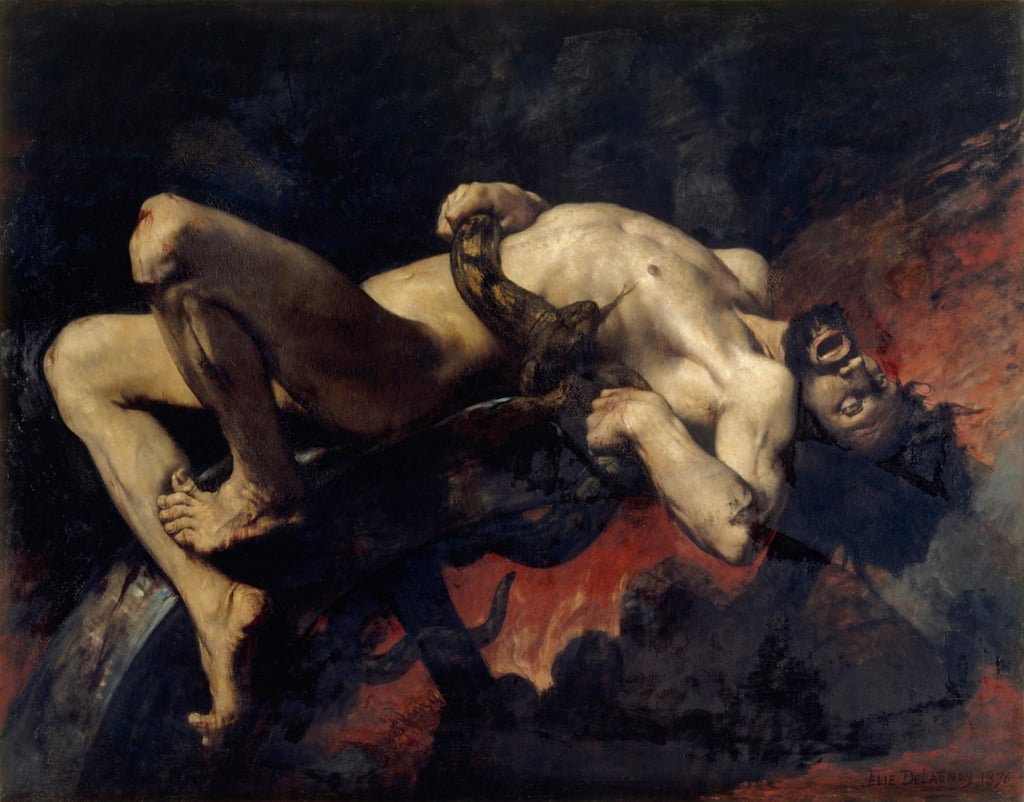
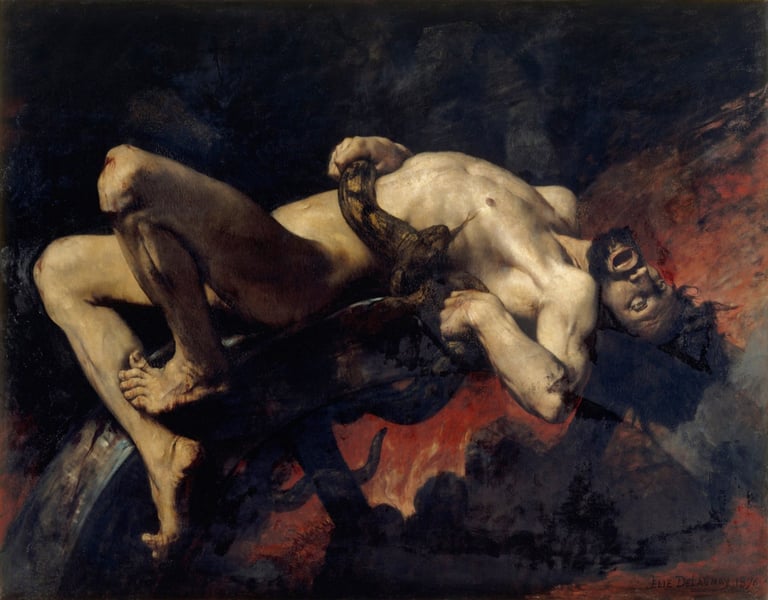
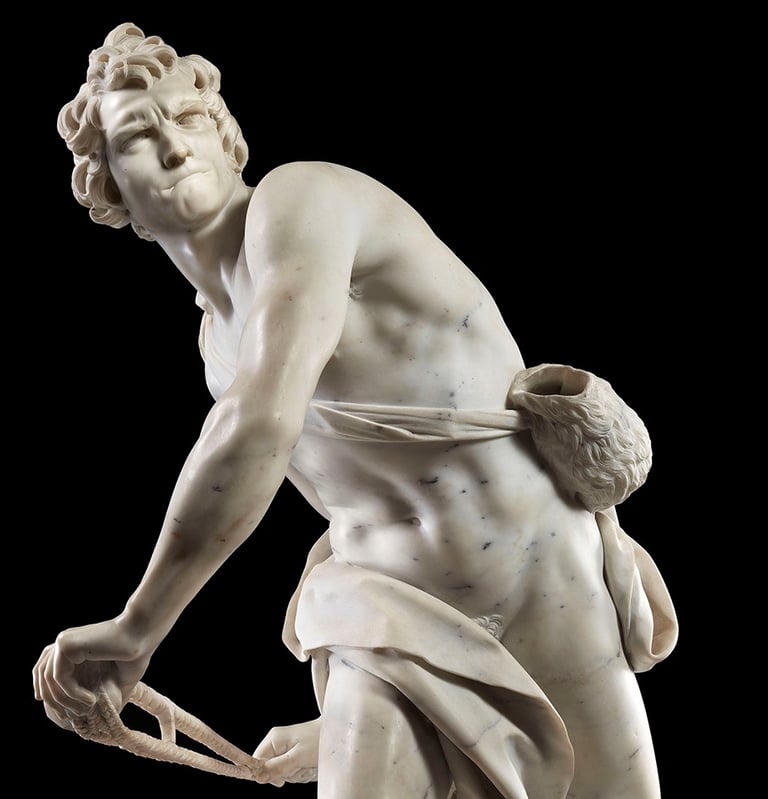
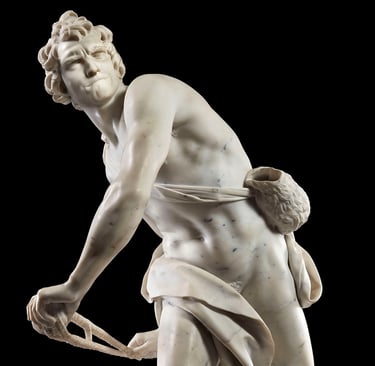
Fig. 15. David by Gian Lorenzo Bernini (1623–1624). Galleria Borghese, Rome, Italy
Fig. 16. Ixion Thrown into the Flames by Jules-Élie Delaunay (c. 1876). Musée d’Orsay, Paris, France
Fig. 17. Daniel in the Lions’ Den by Peter Paul Rubens (c. 1614–1616). National Gallery of Art, Washington, D.C., USA
NEOCLASSICISM AND THE RESURGENCE OF IDEALISM
The late 18th and early 19th centuries had a revival of interest in classical art and philosophy, leading to the emergence of Neoclassicism. Artists such as Jacques-Louis David, in works like The Oath of the Horatii (1784), showcased male figures with a heightened focus on linear precision, stoic heroism, and idealised anatomy, reflecting the moral and civic values linked to the Roman Republic (Rosenberg, 2005, p. 287). The male nude in Neoclassical painting frequently functioned as a symbol of valour, nationalism, and ethical integrity.
Jean Delville's École de Platon (1898) presents a robust continuation of this idealism, featuring a multitude of idealised, ethereal male figures congregating around the philosopher, exemplifying the balance between beauty and intelligence esteemed by Neoclassicism. This allegorical depiction reaffirms classical ideals of symmetry, moral integrity, and intellectual elevation through the male figure.
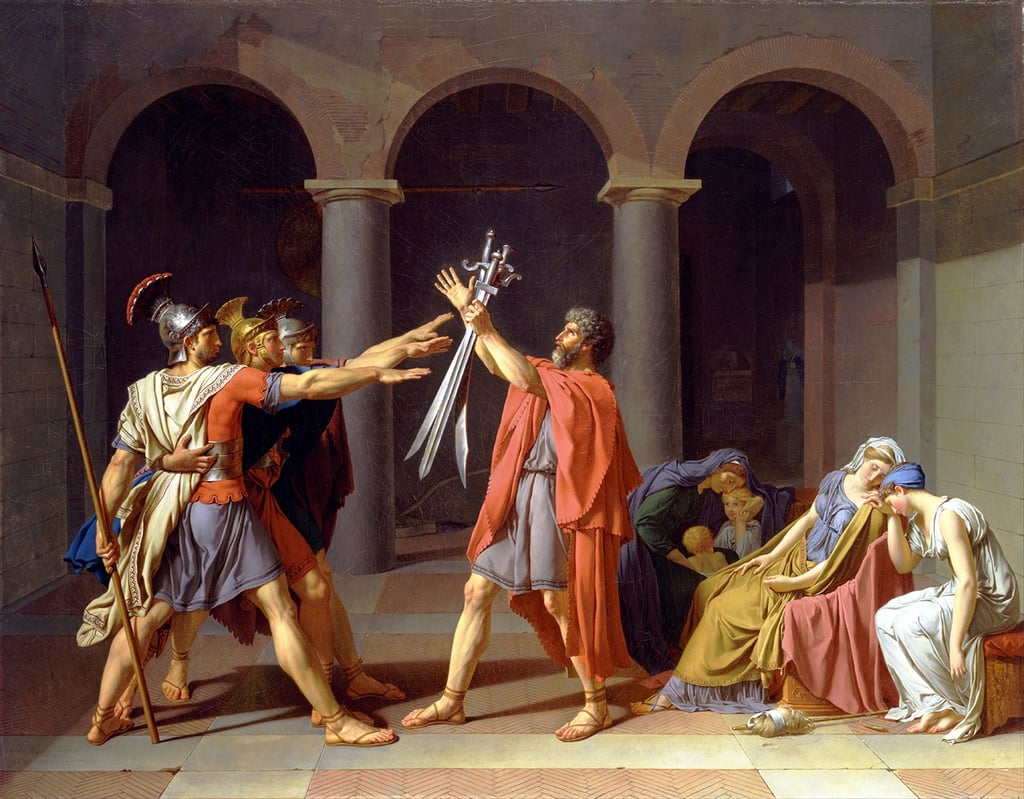
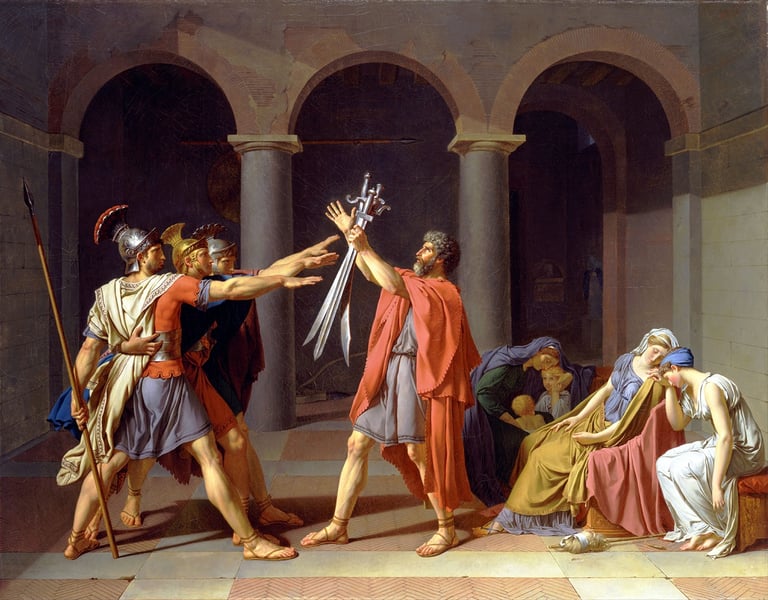
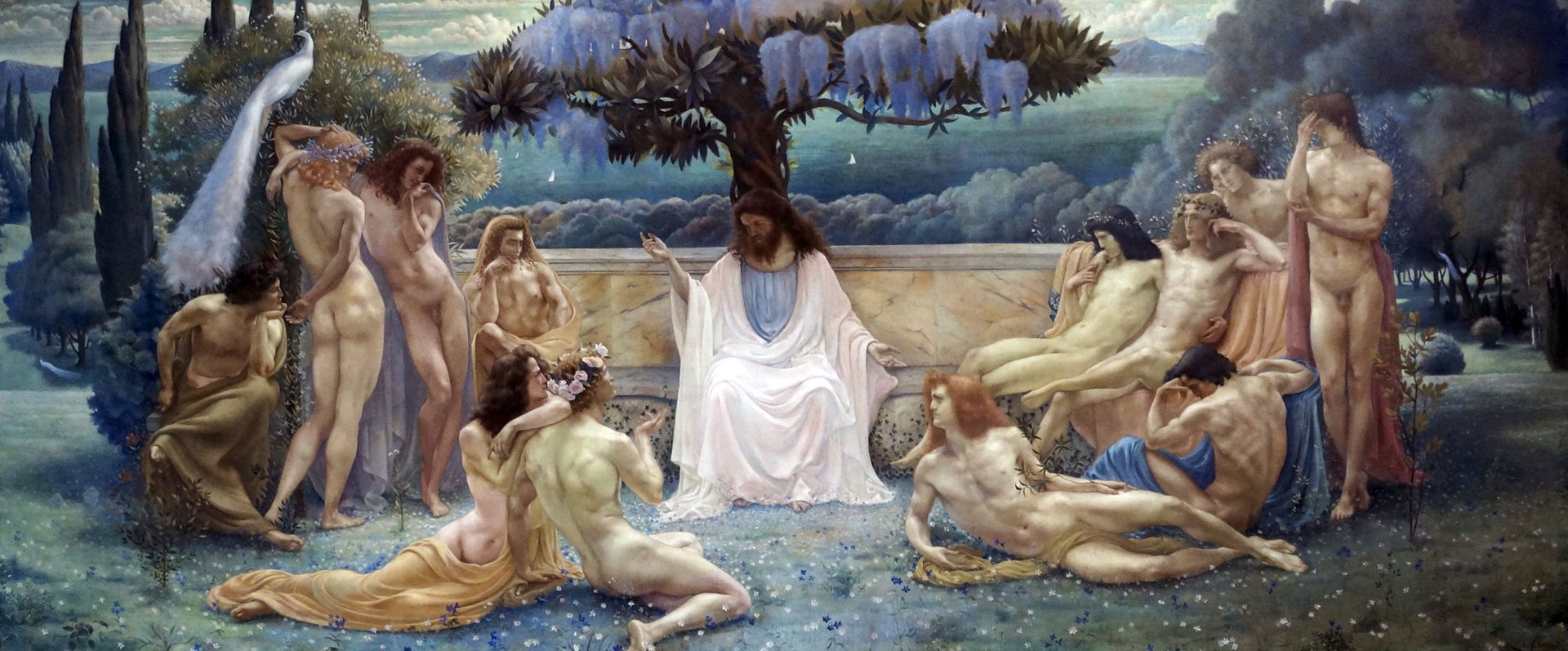
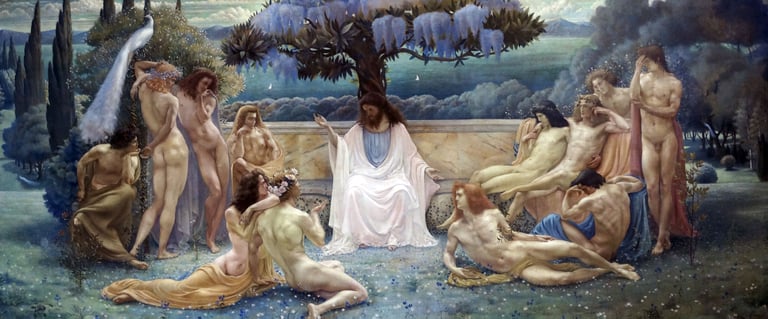
Fig. 18. Oath of the Horatii by Jacques-Louis David (1784). Louvre Museum, Paris, France
Fig. 19. École de Platon by Jean Delville (1898). Musées Royaux des Beaux-Arts de Belgique, Brussels, Belgium
A defining image of Neoclassicism, this painting shows three brothers swearing allegiance to their father before battle. The male bodies are presented in tense, sculptural clarity, symbolising discipline, patriotism, and stoic masculinity. David’s composition reflects Enlightenment values and uses classical forms to embody civic virtue and self-sacrifice.
Delville’s symbolist masterpiece portrays Plato surrounded by idealised male youths in a celestial version of his Academy. The ethereal glow and elongated figures elevate the male body to a spiritual plane, merging classical aesthetics with esoteric philosophy. The painting invites contemplation of the body as a vessel for higher truths and intellectual transcendence.
The 19th century experienced notable transformations in artistic methodologies, departing from the predominantly idealised and heroic representations of the male physique that had prevailed in Western art for centuries. The emergence of Realism, succeeded by diverse avant-garde groups, introduced novel viewpoints and questioned conventional standards in depicting the male figure.
SHIFTING PERSPECTIVES AND CHALLENGES
THE RISE OF REALISM AND BEYOND
Realist artists, such as Gustave Courbet, sought to represent the world authentically, frequently emphasising commonplace individuals and quotidian experiences. Courbet’s The Stone Breakers (1849) and other most contentious paintings, while not solely focused on the nude, depicted male figures engaged in labour, highlighting their physicality in a non-idealised fashion. This transition to portraying the working class and the unembellished truth of the human form was a deviation from academic norms (Rewald, 1973, p. 47).
Likewise, Jean-François Raffaëlli’s The Absinthe Drinkers (c. 1881–1883) embodies the period's preoccupation with disadvantaged individuals. The attire of these working-class men does not conceal the fatigue seen in their postures and expressions, which conveys a psychological realism and physical vulnerability that transforms the viewer's perception of the male body from one of grandeur to one of empathy.
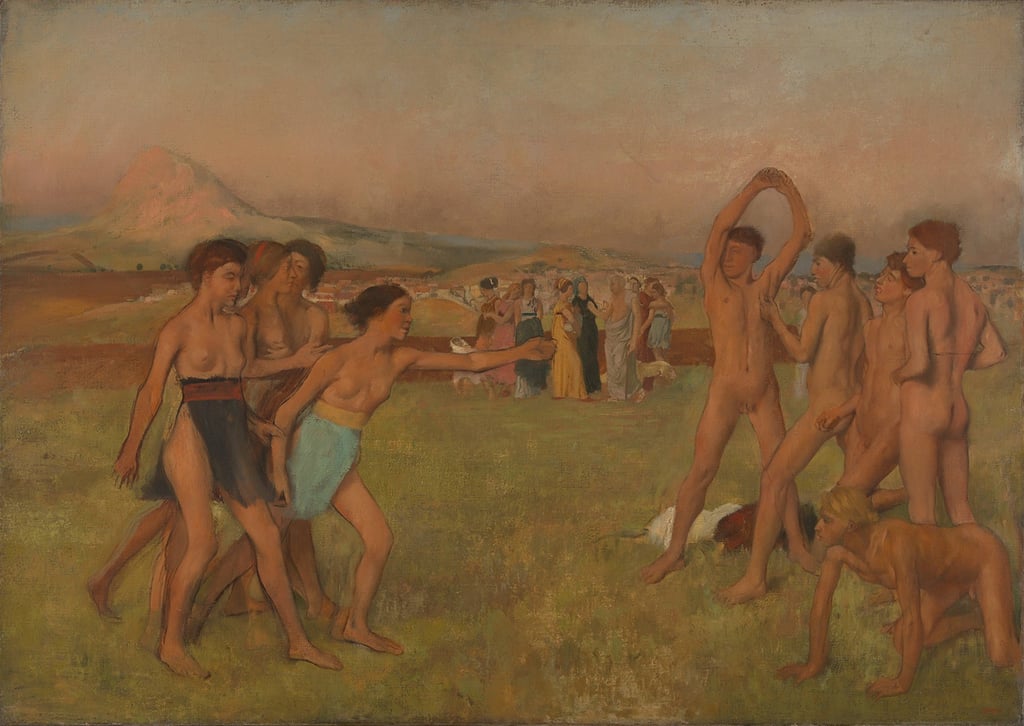
In the latter part of the 19th century, artists like Edgar Degas frequently portrayed male figures in intimate and less heroic stances alongside ballet dancers and bathers, emphasising movement and quotidian activities over big themes. Impressionism and Post-Impressionism, although not exclusively centred on the male nude, facilitated painters' exploration of form, light, and subjective experience, transcending conventional anatomical portrayal.
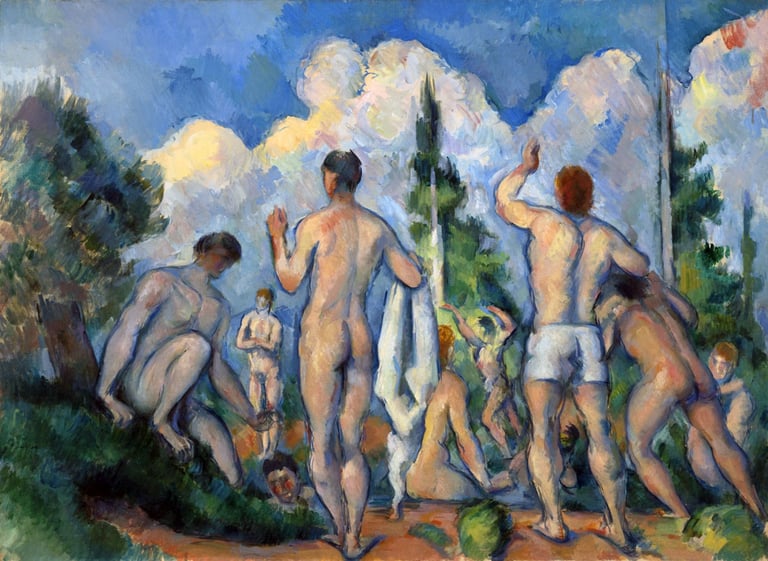
The Bathers series by Paul Cézanne demonstrates this progression. In works like The Large Bathers (1906), Cézanne reinterprets the male form within a cohesive, geometric visual composition. These abstracted figures forfeit their individuality yet acquire symbolic significance, embodying not ideal masculinity but rather shape, rhythm, and modernity itself.
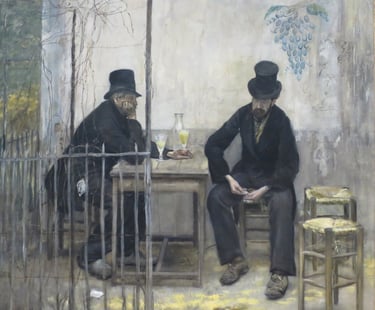
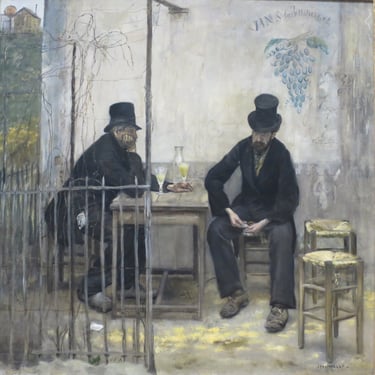
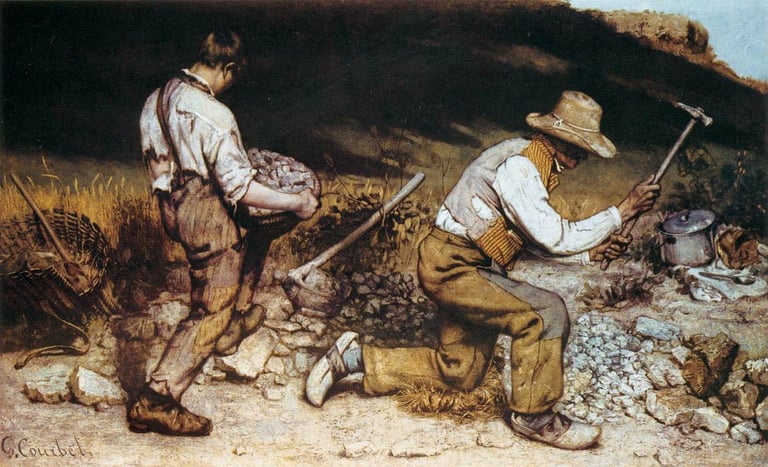
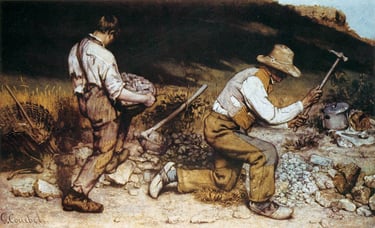
Fig. 20. Gustave Courbet, The Stone Breakers (1849). Oil on canvas. Destroyed during World War II (formerly Gemäldegalerie, Dresden).
Fig. 21. Jean-François Raffaëlli, The Absinthe Drinkers (Les Buveurs d’absinthe) (c. 1881–1883). Oil on canvas. Musée d’Orsay, Paris.
Fig. 22. Edgar Degas, Young Spartans Exercising (c. 1860). Oil on canvas. National Gallery, London.
Fig. 23. Paul Cézanne, Baigneurs (Bathers) (date varies by version, c. 1890s). Oil on canvas. Multiple versions held in various collections, including Musée d’Orsay and Art Institute of Chicago.
Fig. 24. Paul Cézanne, The Large Bathers (Les Grandes Baigneuses) (1906). Oil on canvas. Philadelphia Museum of Art, USA.
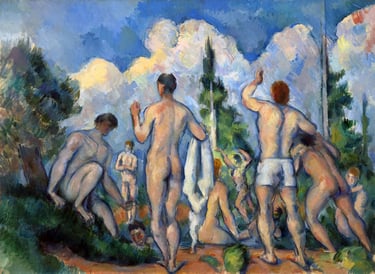
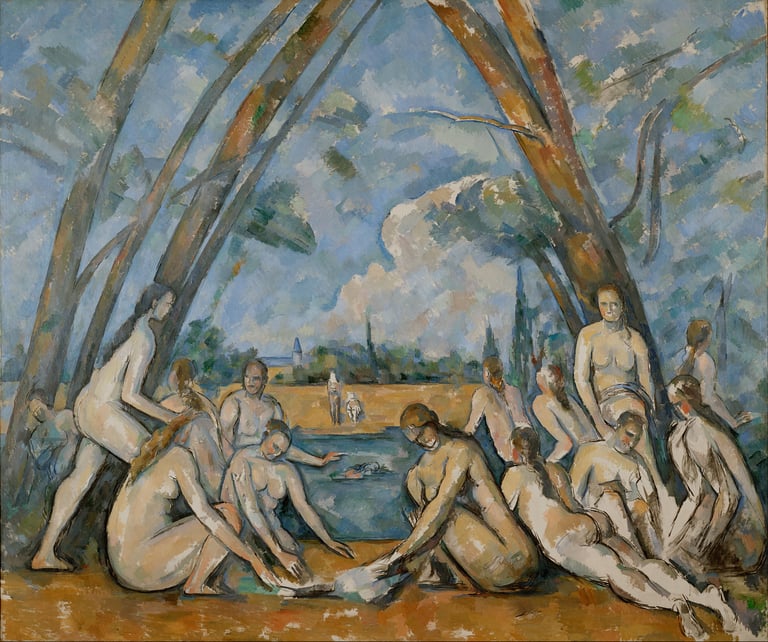
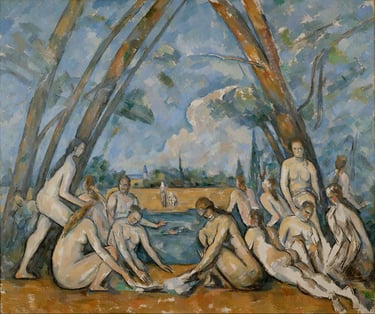
This monumental composition merges landscape and nude figures into a unified design. Although the figures are female, Cézanne’s evolving treatment of the human form—structured, faceless, and monumental—had a profound influence on representations of both male and female bodies in early modern art.
INVESTIGATING MASCULINITY
The 20th century witnessed heightened examination of conventional concepts of masculinity, which was evident in artistic depictions of the male form. Artists commenced the exploration of a broader range of male identities and experiences, beyond the solitary archetype of the robust, heroic guy.
Egon Schiele's Self-Seer II (Death and Man) (1911) illustrates this transition. His unrefined and evocative portrayal of the masculine form, characterised by sharp lines and revealed emotional emotions, embodies a vulnerability seldom observed in prior portrayals (Kallir, 1998, p. 75). Likewise, Henri Gaudier-Brzeska’s Wrestlers (about 1914), though lively and somewhat primal in form, eschews classicism in favour of a more visceral, physical confrontation—symbolising both battle and closeness.
Artists linked to Expressionism and Surrealism explored psychological emotions and the intricacies of male identity, frequently depicting shattered or twisted forms that contested traditional portrayals of wholeness and strength.
In this setting, Wilhelm Lehmbruck's Seated Youth (1916–17) is particularly evocative. The extended, sorrowful figure reflects the trauma and disappointment of postwar Europe, as the male body—formerly a symbol of strength—transforms into a receptacle of contemplation and sorrow.
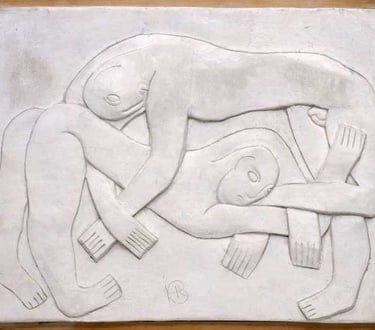
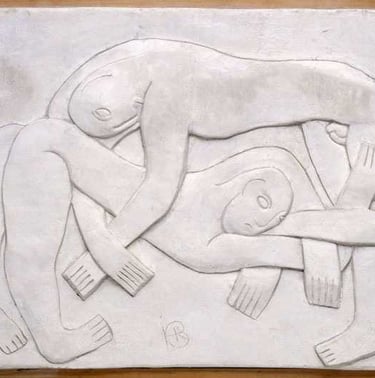
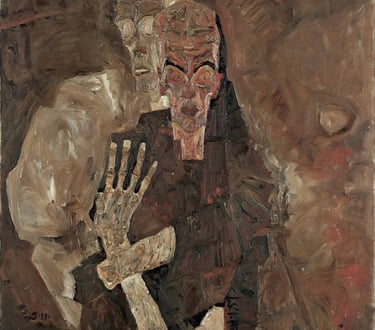
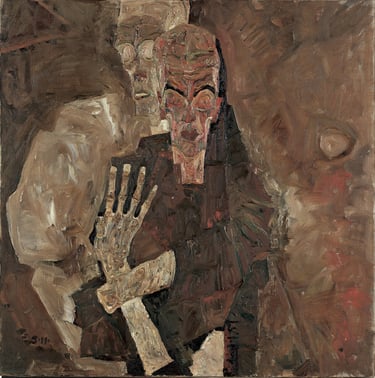
Fig. 25. Egon Schiele, Self-Seer II (Death and Man) (1911). Gouache and pencil on paper. Leopold Museum, Vienna, Austria.
Fig. 26. Henri Gaudier-Brzeska, Wrestlers (1914). Stone sculpture. Tate Britain, London, UK.
Fig. 27. Wilhelm Lehmbruck, Seated Youth (1916–17). Bronze sculpture. Lehmbruck Museum, Duisburg, Germany.
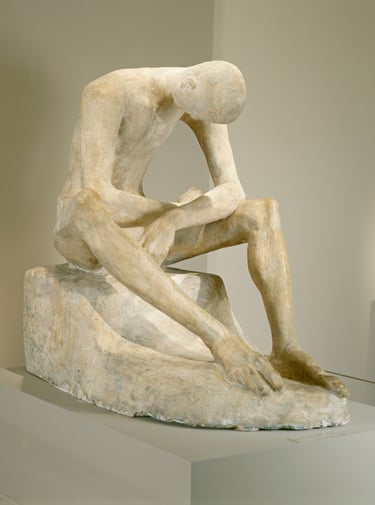
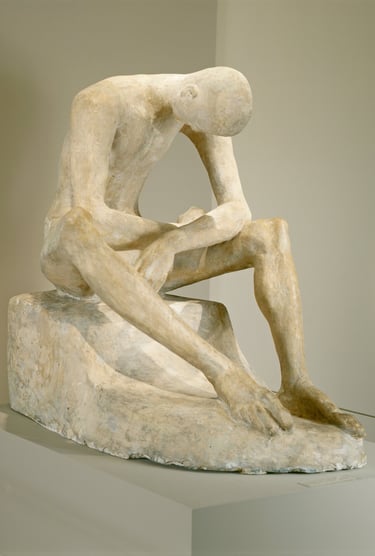
Lehmbruck’s elongated male figure exudes melancholy and introspection. Created during World War I, the work embodies emotional vulnerability and spiritual isolation, offering a poignant counter-image to the heroic masculinity typical of earlier eras.
THE MALE GAZE RE-EXAMINED
Igor Kon (1999) observed that the prevailing "male gaze" in art history frequently regards the female body as the principal target of visual gratification for an assumed heterosexual male audience. The growing presence and impact of female and LGBTQ+ artists have provided different viewpoints, questioning the conventional dynamics in the representation of the masculine body.
Female artists have aggressively challenged the objectification characteristic of the male gaze by depicting males in manners that highlight vulnerability, introspection, or non-sexual intimacy. Alice Neel’s Joe Gould (1933) depicts a dishevelled and slightly fragile male figure, emphasising his character over an idealised form.
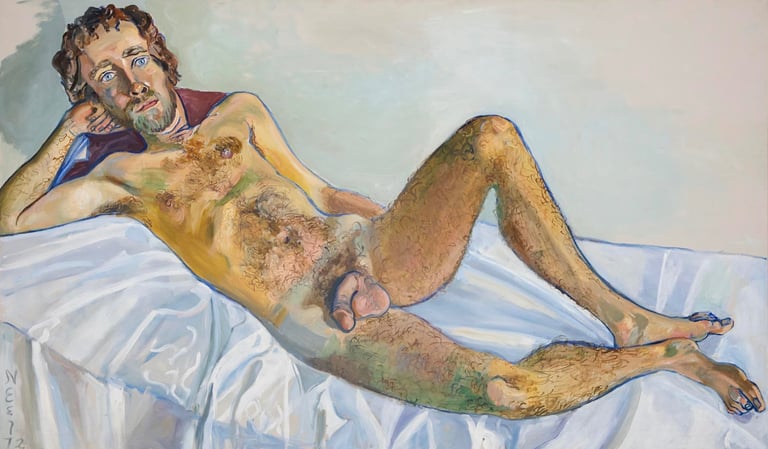
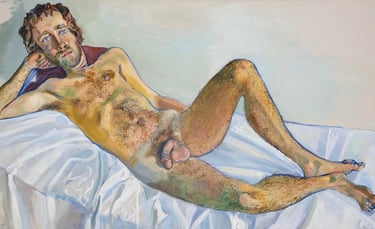
In John Perreault (1972), Neel depicts a reclining naked male figure whose gaze directly engages the observer, reflecting the objectifying gaze back at its origin. This reversal disrupts the conventional dynamic, creating a context in which the masculine body is depicted as neither heroic nor eroticised, but rather psychological.
Jenny Saville, although frequently portraying female bodies, has also produced compelling and candid photographs of men that examine physique in a stark and often harsh manner. Her art compels viewers of all genders to engage with the physicality of the male form beyond traditional sexiness.
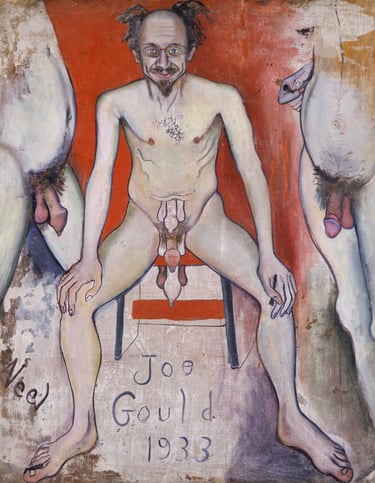
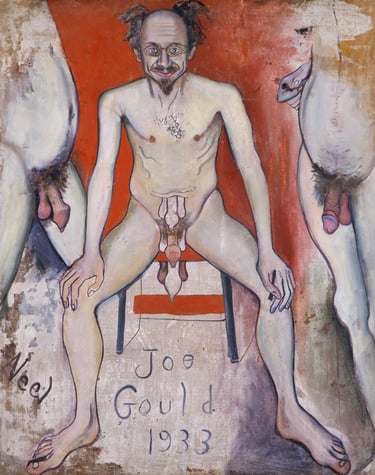
Fig. 28. Alice Neel, Joe Gould (1933). Oil on canvas. The Addison Gallery of American Art, Andover, Massachusetts, USA.
Fig. 29. Alice Neel, John Perreault (1972). Oil on canvas. Whitney Museum of American Art, New York, USA.
Fig. 30. David Hockney, Peter Getting Out of Nick’s Pool (1966). Acrylic on canvas. Walker Art Gallery, Liverpool, UK.
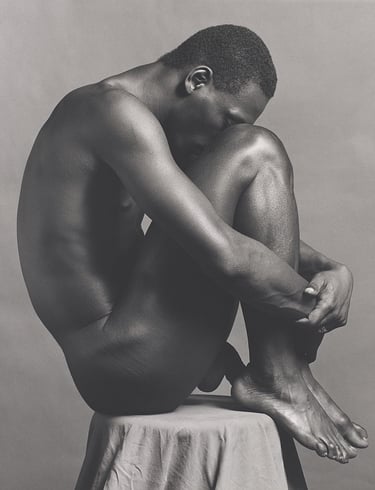
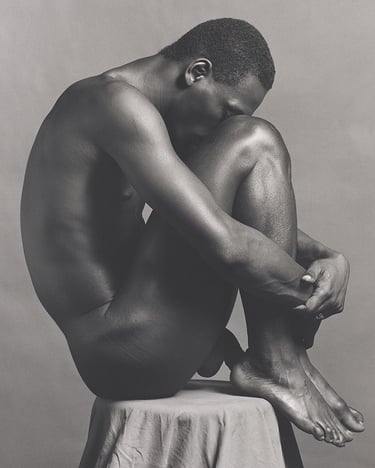
Fig. 31. Robert Mapplethorpe, Ajitto (1981). Gelatin silver print. The J. Paul Getty Museum, Los Angeles, USA.
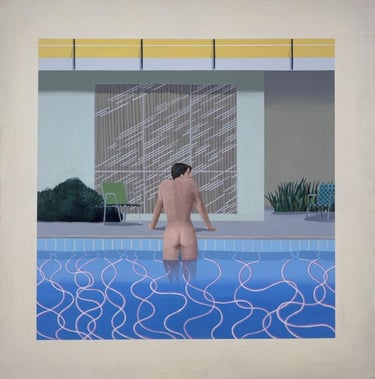
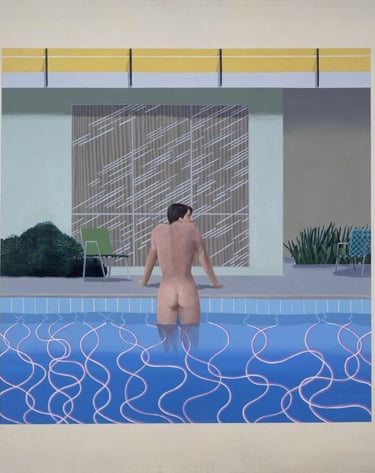
LGBTQ+ artists have significantly contributed to altering perceptions, frequently reclaiming the male body as an object of desire and examining male intimacy and sexuality through their personal experiences. David Hockney's Peter Getting Out of Nick's Pool (1966) depicts the masculine physique with a pronounced expression of homoerotic longing and informal closeness, a viewpoint predominantly missing from the prevailing art historical narrative of that era.
Robert Mapplethorpe's Ajitto (1981) presents a similarly audacious assault on prevailing standards. The model's curled posture recalls classical sculpture, notably Michelangelo's Dying Slave; nonetheless, Mapplethorpe's setting and medium reposition this body within a uniquely gay aesthetic of desire, domination, and celebration.
Contemporary artists persist in this exploration. Catherine Opie’s Self-Portrait/Cutting (1993), while not a conventional male nude, reinterprets the symbolic languages of corporeality and identity by etching a household scene onto her own back. Her pictures of masculine-presenting men and gay folks further explore themes of community and selected identity.
Artists such as Zanele Muholi, while largely concentrating on Black lesbian, homosexual, bisexual, transgender, and intersex individuals in South Africa, facilitate a broader transformation by prioritising disadvantaged bodies and perspectives, thereby providing compelling alternatives to prevailing visual narratives.
SEXUALITY AND EROTICISM
The depiction of masculine sexuality and eroticism in art has experienced considerable transformations. The explicit representation of male desire and intimacy, historically limited by social taboos and frequently expressed through mythological or allegorical frameworks, has become increasingly common in the modern period.
Tom of Finland's oeuvre, exemplified by his Kake series, boldly embraced homoerotic desire and hypermasculinity, liberating these aesthetics from marginalisation and suppression (Melinkoff, 2009, p. 102). His archetypes—policemen, bikers, sailors—amplified normative masculinity while also subverting it, portraying the masculine physique as both humorous and subversive.
Modern artists persist in examining varied representations of male sexuality, contesting heteronormative viewpoints and honouring the plasticity of desire. Luke Gilford’s photographic and cinematic endeavours with queer rodeo communities amalgamate compassion and sexuality, capturing the multifaceted nature of masculinity as traditional, performative, and radically inclusive.


Fig. 32-34. Tom of Finland, Untitled (Touko Laaksonen), c. 1980s. Graphite on paper. Tom of Finland Foundation, Los Angeles, USA.
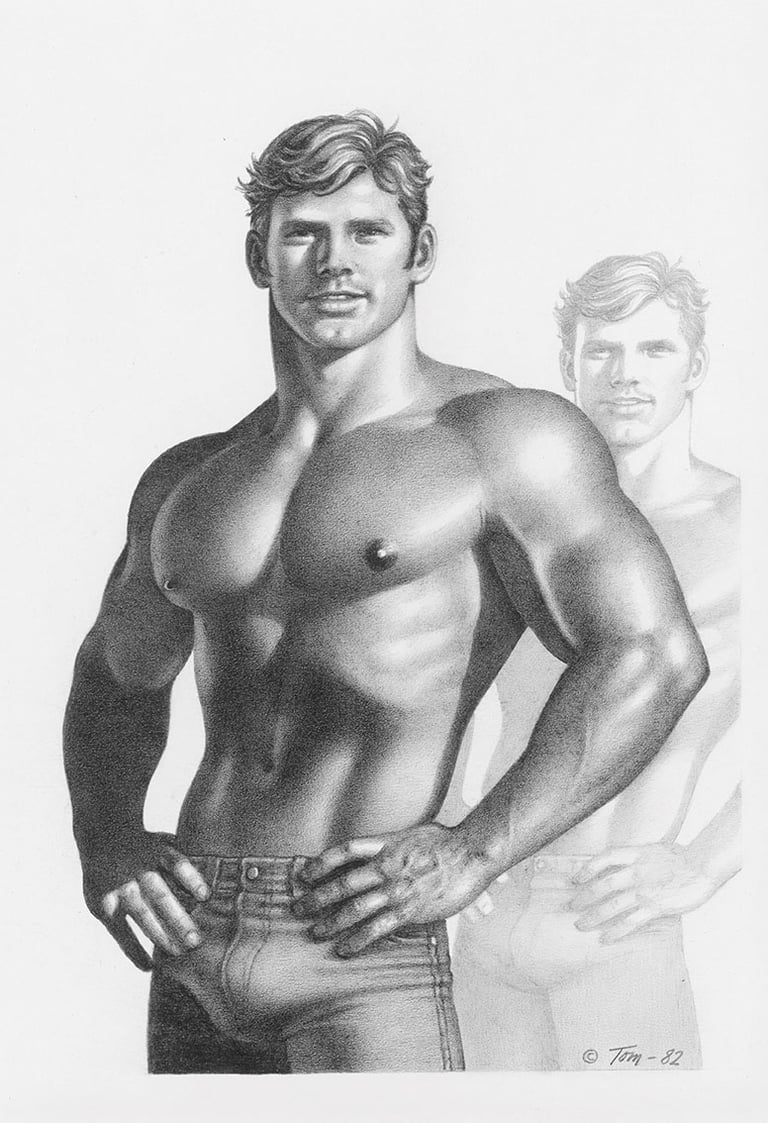
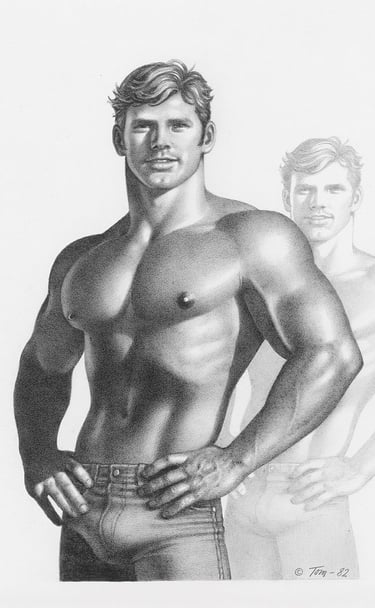
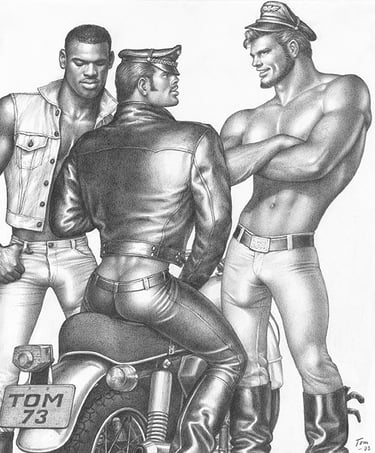
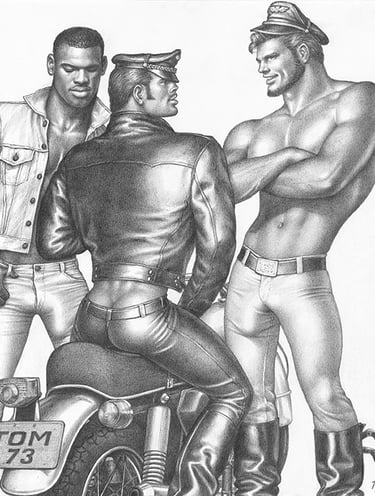
Tom of Finland’s drawings are iconic in their celebration of hypermasculinity, eroticism, and queer desire. His depictions of muscular men in stylised, sexually charged poses were groundbreaking in their unapologetic affirmation of gay male identity during a time of widespread societal repression. These works not only shaped visual culture within the LGBTQ+ community but also challenged mainstream perceptions of masculinity and male beauty.
Contemporary artists, influenced by the transformations and challenges of the 20th century, persist in expanding boundaries and examining the male body in increasingly varied and intricate manners. Their work frequently embodies contemporary social, political, and cultural discourses around identity, sexuality, vulnerability, and the body as a locus of individual and communal significance.
CONTEMPORARY EXPLORATIONS
DIVERSE REPRESENTATIONS
Contemporary art has unequivocally diverged from singular depictions of masculinity. Artists currently explore a diverse array of masculine identities, including variations in colour, physique, gender expression, and sexual orientation. Kehinde Wiley’s monumental portraits, exemplified by Napoleon Leading the Army over the Alps (2005), reinterpret classical Western artworks featuring current Black male figures as subjects. By incorporating these characters within conventional heroic and Eurocentric visual vocabulary, Wiley not only reclaims a position in art history but also analyses the racial dynamics of visibility and power (Wiley, n.d.).
Conversely, Salman Toor presents intimate and sensitive depictions of LGBT South Asian guys in quotidian domestic settings. Works such as The Bar on East 13th Street (2019) eschew monumentalism in favour of vulnerability, examining issues of alienation, community, and cultural hybridity. His paintings serve as a subtle contrast to the conventionally stoic or eroticised male form, instead presenting serene themes of belonging and introspection (Toor, n.d.).
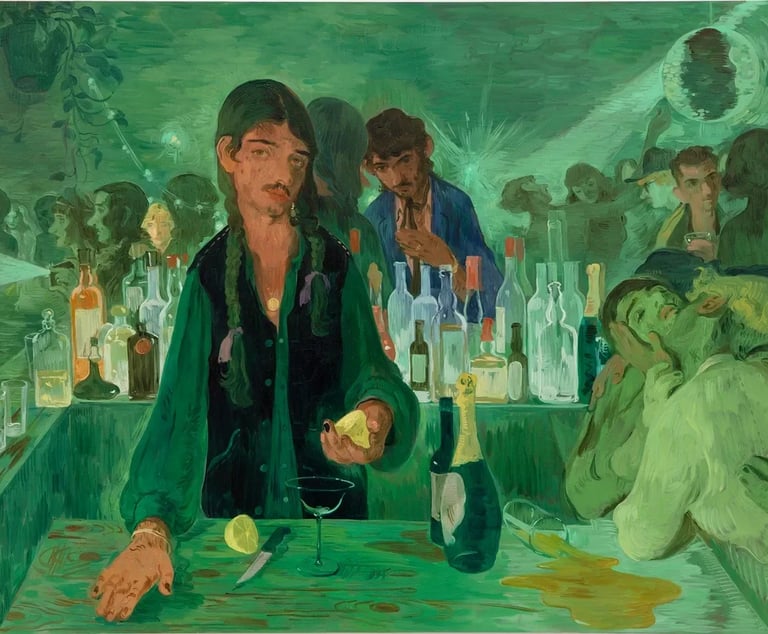
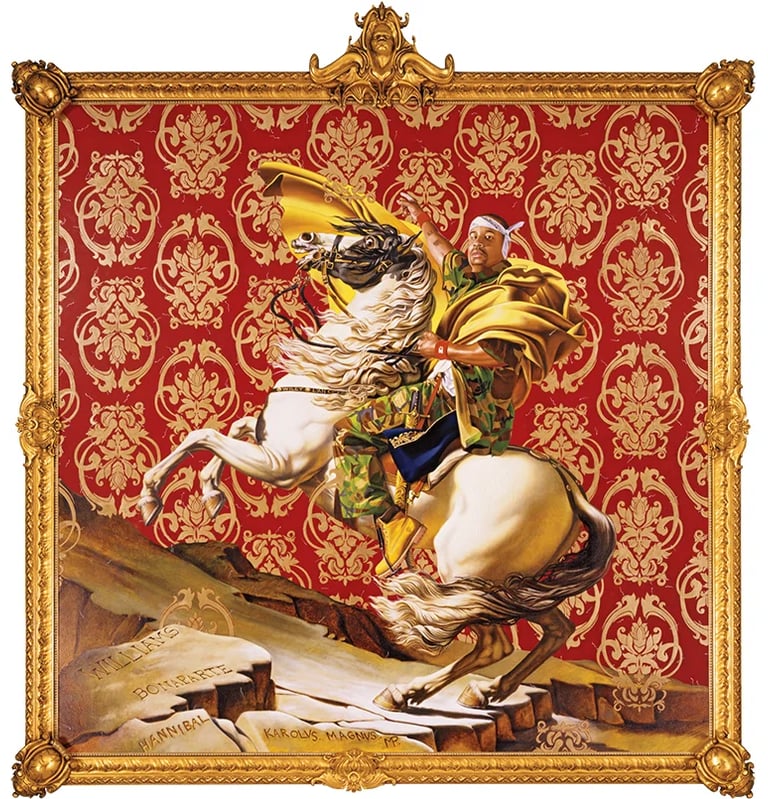
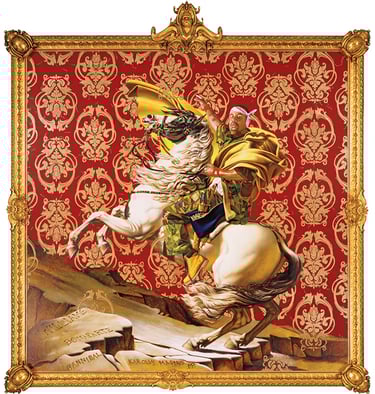
Fig. 35. Kehinde Wiley, Napoleon Leading the Army over the Alps (2005). Oil on canvas, 274.3 × 274.3 cm. Brooklyn Museum of Art, New York.
This monumental work reimagines Jacques-Louis David’s iconic portrait of Napoleon, inserting a contemporary Black man in modern clothing, reclaiming space in historical narratives.
Pierre et Gilles, the French collaborative pair, amalgamate photography and painting to produce baroque, frequently homoerotic depictions of males that contrast classical mythology with kitsch aesthetics. In Mercury (2001), a masculine figure adopts a godlike stance akin to classical sculpture; nonetheless, the vivid colours, shimmering background, and theatrical elements infuse queer desire and fantasy into conventional heteronormative imagery. Their work subverts both the perspective and the tradition it alludes to, implying that beauty, sensuality, and spectacle need not adhere to prevailing standards.
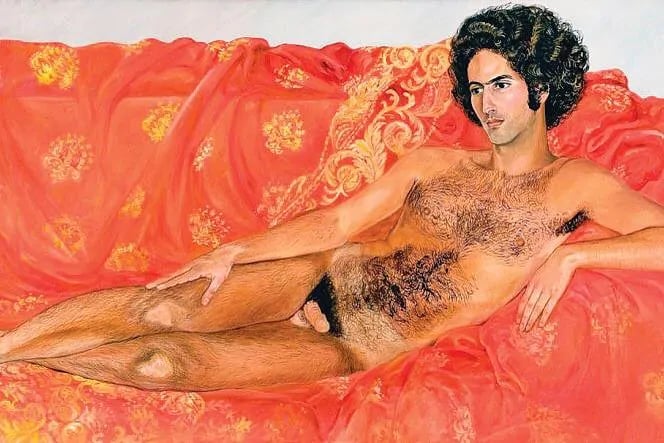
Sylvia Sleigh, a prominent pioneer in feminist art, explicitly confronted the gendered aspects of the nude. Lawrence Alloway's picture Reclining Nude (1973) recontextualises the male form in a pose traditionally associated with female subjects—sensuous, contemplative, and designed for contemplation. Her portrayal is profoundly sympathetic and sensitive, devoid of objectification. Sleigh's reversal of the gaze exemplifies the reconfiguration of gender and representation through art (Sleigh, 1973).


Fig. 36. Salman Toor, The Bar on East 13th Street (2019).
Fig. 37. Pierre et Gilles, Mercury (2001).
Fig. 38. Sylvia Sleigh, Lawrence Alloway’s Reclining Nude (1973).
PHOTOGRAPHIC ART AND PERFORMANCE ART
Photography and performance art have demonstrated their efficacy as mediums in this continuous study. Wolfgang Tillmans's informal, diary-like photographs—exemplified by Lutz & Alex Sitting in the Trees (1992)—depict male companionship without explicit eroticism. His art blurs the distinctions between public and private, formal and informal, presenting alternative masculinities rooted in transparency and emotional engagement (Tillmans, n.d.).
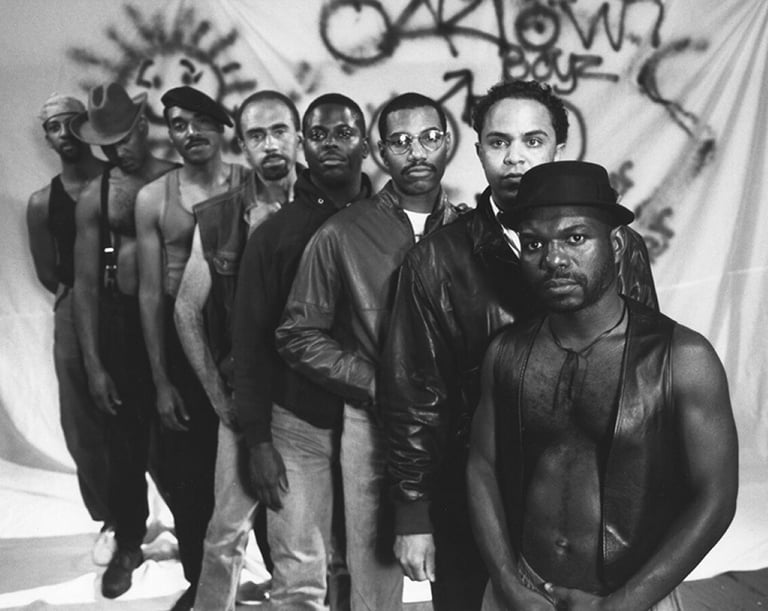
Performance has functioned as a potent medium for addressing racial and sexual identity. In Tongues Untied (1989), Marlon Riggs employed film as a corporeal medium of performance, integrating spoken word, dance, and documentary to highlight the lived experiences of Black gay men. His body serves as a locus of defiance and narrative, contesting obliteration and asserting acknowledgement.
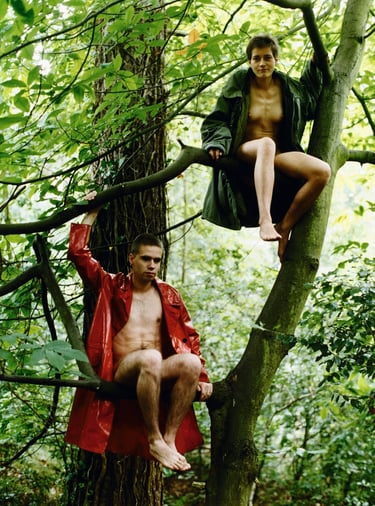

Fig. 39. Wolfgang Tillmans, Lutz & Alex Sitting in the Trees (1992).
Fig. 40. Marlon Riggs, Tongues Untied (1989).
CONFRONTING CONVENTIONS
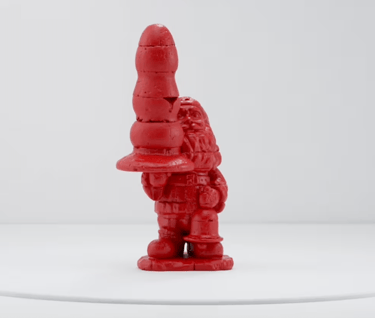
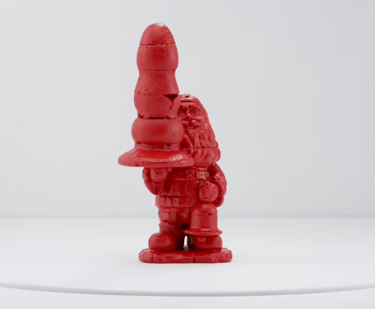
Artists such as Paul McCarthy utilise the grotesque and bizarre to deconstruct sanitised portrayals of masculinity. His performances and sculptures—frequently incorporating physiological fluids, exaggerated phallic shapes, or violent absurdity—subvert traditional ideas of strength and beauty. McCarthy's oeuvre is unsettling; it challenges the observer with the primal, the excessive, and the performative, undermining the male figure's assertion of authority or composure (McCarthy, n.d.).
Furthermore, contemporary art increasingly embodies an acceptance of gender fluidity and non-binary expression. The strict binaries of previous times are being supplanted by representations of the body that resist simple categorisation. Artists like Cassils utilise their own shifting bodies in performances like Becoming an Image (2012) to interrogate the dynamics of power, gender, and perception as they manifest via the corporeal form.
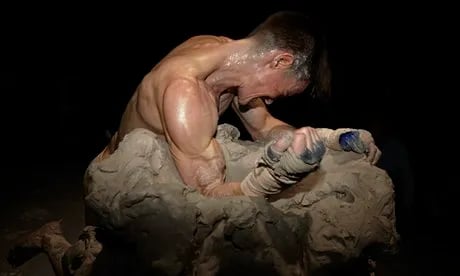
Fig. 41. Paul McCarthy, Santa with Butt Plug (2007). Middelheim Museum, Antwerp.
Fig. 42. Cassils, Becoming an Image (2012).
THE BODY ANS A SOCIAL AND POLITICAL COMMENTARY
The male physique in contemporary art is both intimate and profoundly political. The AIDS pandemic compelled artists to confront themes of fragility, mortality, and action. Félix González-Torres’s Untitled (Portrait of Ross in L.A.) (1991)—a dwindling pile of sweets as viewers partake—transforms the body into a symbol for loss and love, challenging the silence around LGBT mortality while encouraging social engagement.
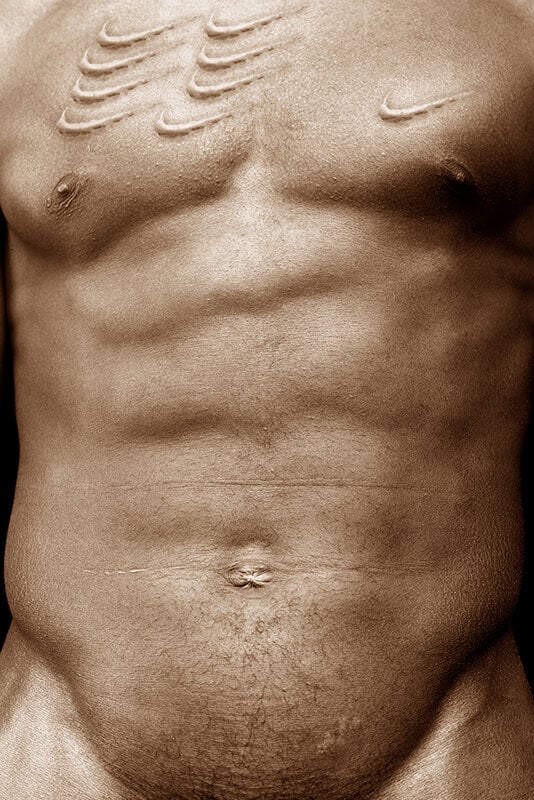
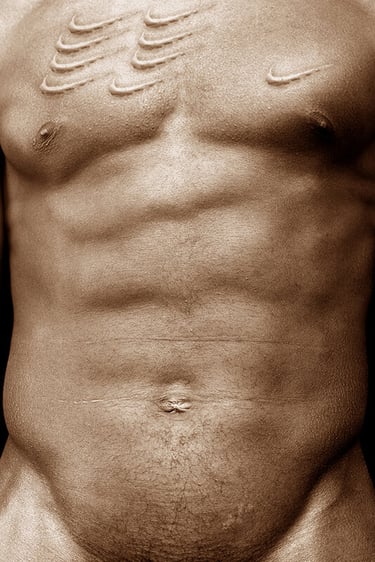
Even in non-crisis contexts, the male figure is employed to examine systems of control, violence, and consumption. Artists such as Hank Willis Thomas recontextualise historical imagery—such as sports commercials and slave auction posters—to illustrate the commodification, control, and aestheticisation of Black male bodies throughout history. In this process, he conflates past and present, exposing the intricate interconnections among race, gender, and capitalism.
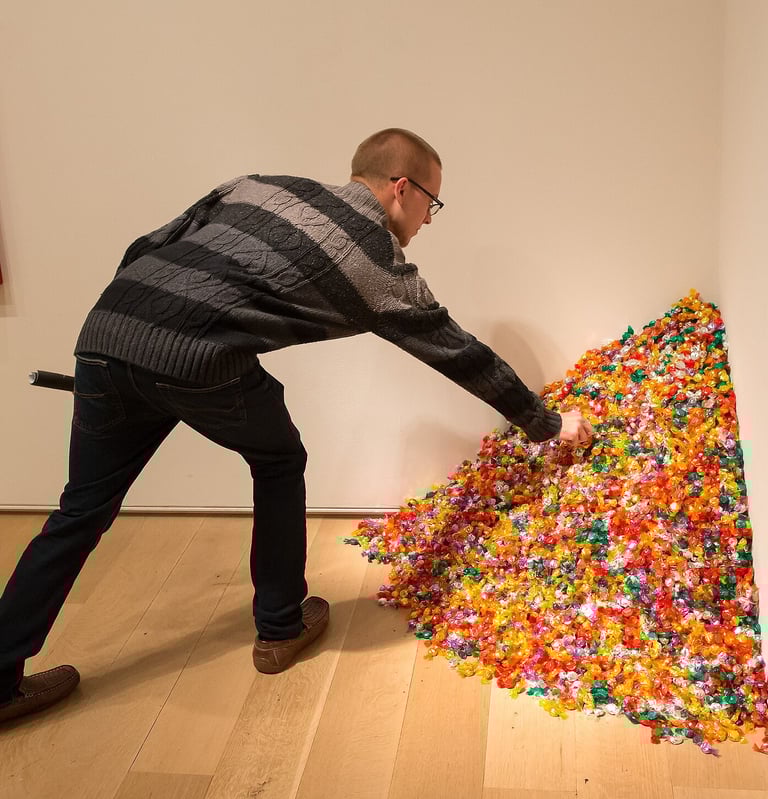
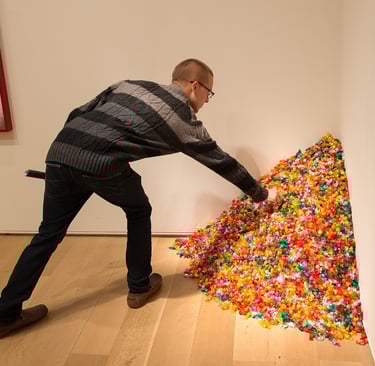
Fig. 43. Félix González-Torres, Untitled (Portrait of Ross in L.A.) (1991).
Fig. 44. Hank Willis Thomas, Scarred Chest (2003).
An interactive installation of 175 pounds of candy, symbolizing the ideal body weight of the artist’s partner Ross, who died of AIDS. Viewers are invited to take a piece, echoing the gradual loss from illness and the tenderness of love.
Modern investigations of the masculine physique in art are marked by an emphasis on inclusion, diversity, and emotional complexity. Artists are systematically dismantling conventional norms, addressing global challenges, and formulating innovative visual languages for masculinity that encapsulate the intricacies of the 21st century. The male body remains a dynamic subject of exploration, including themes of sensuality, satire, fragility, and defiance—illuminating both the essence of masculinity and the nature of perception.
REFERENCES
Alpers, S. (1983). The Vexations of Art: Velázquez and Others. Yale University Press.
Clark, K. (1976). The Nude: A Study in Ideal Form. Oxford University Press.
Cole, M. (2017). A Renaissance of Our Own: Art, Sexuality, and the Male Nude. Thames & Hudson.
Hartt, F., & Wilkins, D. G. (2013). History of Italian Renaissance Art. Pearson.
Pollitt, J. J. (1986). Art in the Hellenistic Age. Cambridge University Press.
Pointon, M. (1990). Naked Authority: The Body in Western Painting, 1830–1908. Cambridge University Press.
Rosenberg, P. (2005). Jacques-Louis David: Empire to Exile. Yale Wittkower, R. (1993). Art and Architecture in Italy, 1600–1750. Yale University Press.
Kallir, J. (1998). Egon Schiele: The Complete Works. Harry N. Abrams.
Melinkoff, K. (2009). Tom of Finland: His Life and Times. Bruno Gmünder.
Rewald, J. (1973). The History of Impressionism. The Museum of Modern Art.
Clark, K. (1976). The Nude: A Study in Ideal Form. Oxford University Press.
Kon, I. (1999). The Sexual Revolution in Russia. Free Press.
Wiley, K. (n.d.). Napoleon Leading the Army over the Alps. Retrieved from [https://www.kehindewiley.com].
Toor, S. (n.d.). The Bar on East 13th Street. Retrieved from [https://www.luhringaugustine.com/artists/salman-toor#tab:thumbnails].
Sleigh, S. (1973). Lawrence Alloway Reclining Nude. Retrieved from [https://www.sylviasleigh.org].
Tillmans, W. (n.d.). Lutz & Alex Sitting in the Trees. Retrieved from [https://tillmans.co.uk/installation-views-archive].
McCarthy, P. (n.d.). Artist portfolio. Retrieved from [https://www.paulmccartney.com].
Riggs, M. (1989). Tongues Untied. Signifyin’ Works.
IMAGES
Fig. 1. Paul Cadmus, The Bath (c. 1951).
Fig. 2. Karl Sterrer, Atlas (date unknown).
Fig. 3. Evelyn De Morgan, Phosphorus and Hesperus (1882).
Fig. 4. Eugène Jansson, The Navy Bathhouse (1907).
Fig. 5. Aleksandr Deyneka, After the Battle (1944).
Fig. 6. Jean-Baptiste Frédéric Desmarais, Le Berger Pâris (18th century).
Fig. 7. Edvard Munch, Bathing Men (1907–1908).
Fig. 8. Camille Félix Bellanger, Abel (c. 1874).
Fig. 9. Yaroslav Sobol, Nude Male Model (date unknown).
Fig. 10. Michelangelo, David, 1501–1504. Marble, Galleria dell’Accademia, Florence.
Fig. 11. Leonardo da Vinci, The Last Supper, c. 1495–1498. Mural, Santa Maria delle Grazie, Milan.
Fig. 12. Polykleitos, Doryphoros (Spear Bearer), c. 440 BCE. Roman marble copy after a Greek bronze original. Museo Archeologico Nazionale, Naples.
Fig. 13. Hippolyte Flandrin, Nude Youth Sitting by the Sea, c. 1836. Oil on canvas, Louvre Museum, Paris.
Fig. 14. Jacques-Louis David, Patroclus, 1780. Oil on canvas, 121.5 × 170.4 cm. Musée Thomas-Henry, Cherbourg, France.
Fig. 15. Gian Lorenzo Bernini, David (1623–1624). Galleria Borghese, Rome, Italy
Fig. 16. Jules-Élie Delaunay, Ixion Thrown into the Flames (c. 1876). Musée d’Orsay, Paris, France
Fig. 17. Peter Paul Rubens, Daniel in the Lions’ Den (c. 1614–1616). National Gallery of Art, Washington, D.C., USA
Fig. 18. Jacques-Louis David, Oath of the Horatii (1784). Louvre Museum, Paris, France
Fig. 19. Jean Delville, École de Platon (1898). Musées Royaux des Beaux-Arts de Belgique, Brussels, Belgium
Fig. 20. Gustave Courbet, The Stone Breakers (1849). Oil on canvas. Destroyed during World War II (formerly Gemäldegalerie, Dresden).
Fig. 21. Jean-François Raffaëlli, The Absinthe Drinkers (Les Buveurs d’absinthe) (c. 1881–1883). Oil on canvas. Musée d’Orsay, Paris.
Fig. 22. Edgar Degas, Young Spartans Exercising (c. 1860). Oil on canvas. National Gallery, London.
Fig. 23. Paul Cézanne, Baigneurs (Bathers) (date varies by version, c. 1890s). Oil on canvas. Multiple versions held in various collections, including Musée d’Orsay and Art Institute of Chicago.
Fig. 24. Paul Cézanne, The Large Bathers (Les Grandes Baigneuses) (1906). Oil on canvas. Philadelphia Museum of Art, USA.
Fig. 25. Egon Schiele, Self-Seer II (Death and Man) (1911). Gouache and pencil on paper. Leopold Museum, Vienna, Austria.
Fig. 26. Henri Gaudier-Brzeska, Wrestlers (1914). Stone sculpture. Tate Britain, London, UK.
Fig. 27. Wilhelm Lehmbruck, Seated Youth (1916–17). Bronze sculpture. Lehmbruck Museum, Duisburg, Germany.
Fig. 28. Alice Neel, Joe Gould (1933). Oil on canvas. The Addison Gallery of American Art, Andover, Massachusetts, USA.
Fig. 29. Alice Neel, John Perreault (1972). Oil on canvas. Whitney Museum of American Art, New York, USA.
Fig. 30. David Hockney, Peter Getting Out of Nick’s Pool (1966). Acrylic on canvas. Walker Art Gallery, Liverpool, UK.
Fig. 31. Robert Mapplethorpe, Ajitto (1981). Gelatin silver print. The J. Paul Getty Museum, Los Angeles, USA.
Fig. 32-34. Tom of Finland, Untitled (Touko Laaksonen), c. 1980s. Graphite on paper. Tom of Finland Foundation, Los Angeles, USA.
Fig. 35. Kehinde Wiley, Napoleon Leading the Army over the Alps (2005), oil on canvas, 274.3 × 274.3 cm. Brooklyn Museum of Art, New York.
Fig. 36. Salman Toor, The Bar on East 13th Street (2019).
Fig. 37. Pierre et Gilles, Mercury (2001).
Fig. 38. Sylvia Sleigh, Lawrence Alloway’s Reclining Nude (1973).
Fig. 39. Wolfgang Tillmans, Lutz & Alex Sitting in the Trees (1992).
Fig. 40. Marlon Riggs, Tongues Untied (1989), film still.
Fig. 41. Paul McCarthy, Santa with Butt Plug (2007). Middelheim Museum, Antwerp.
Fig. 42. Cassils, Becoming an Image (2012), performance still.
Fig. 43. Félix González-Torres, Untitled (Portrait of Ross in L.A.) (1991), installation with candies, ideal weight 175 lbs.
Fig. 44. Hank Willis Thomas, Scarred Chest (2003).