
THE BODY
Pankration, panic, and the fragile illusion of control
WHERE IDENTITY BREAKS
by Sezer Ali | DEC 25, 2025
ART & IDENTITY
The body was our first language.
Before representation, before naming, before identity, the body existed as a fact.
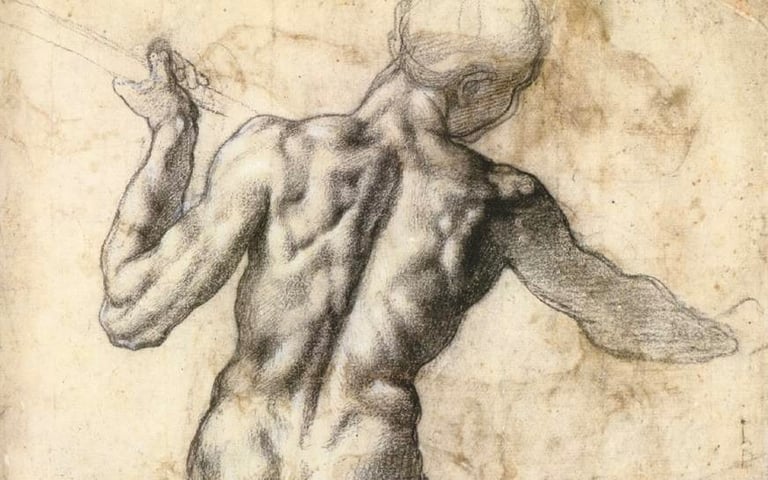
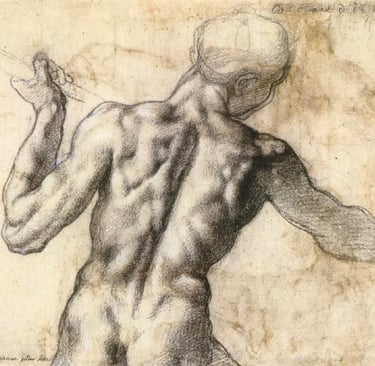
My interest in how bodies communicate meaning began early, during my education at an art school, where the human figure was never treated as a neutral form. Anatomy was not merely structure; it was tension, intention, vulnerability. A torso could imply power or fragility. A posture could indicate discipline, desire, or fear. Later, this fascination deepened through translated critical texts in Bulgarian periodical publications—most notably the work of Igor Semyonovich Kon, whose writings challenged the idea of the male body as a natural given. Kon viewed masculinity as a cultural construct rather than a biological imperative, contending that male physicality is influenced, governed, and interpreted by social norms rather than mere instinct. As he observed, masculinity is not inherited; it is constructed, rehearsed, and constantly tested. (Kon, 2003)
This perspective becomes particularly revealing when viewed through the lens of antiquity—not the polished antiquity of marble statues and ideal proportions, but one marked by struggle, exposure, and risk. Among the ancient Greek athletic practices, pankration stands apart. A hybrid of wrestling and striking, it was a combat discipline with minimal rules and maximal physical demand. Classical sources describe it not as a spectacle, but as an agon—a contest in which the stakes were endurance, submission, and survival. (Vernant, 1983) In pankration, the body was stripped of symbolic excess. There was no pose to maintain, no image to preserve. Only reaction remained.
It is here that Pan (Πάν) enters—not as a decorative mythological figure, but as an archetype of rupture. Pan represents sudden fear, unanticipated panic, and the dissolution of control. Neither fully human nor animal, Pan occupies thresholds: between civilisation and wilderness, reason and impulse, and form and collapse. As Jean-Pierre Vernant reminds us, Greek culture did not deny chaos; it lived in constant negotiation with it. Order existed precisely because its dissolution was always possible. (Vernant, 1983) Pan is the embodiment of that potential.
This article is not an exercise in mythological analysis, nor a historical account of an ancient sport. Instead, it uses pankration as a conceptual framework and Pan as a philosophical pressure point to ask a contemporary question: what remains of identity when the image fails? In a culture where bodies are endlessly visualised, curated, and disciplined—through fitness regimes, wellness ideologies, and digital representation—the ancient combat arena exposes an uncomfortable truth. Beneath identity as narrative and art as form, there persists a body that does not seek meaning but endurance.
PANKRATION AND THE REFUSAL OF THE IMAGE
In classical art, the body is resolved.
In pankration, it is interrupted.
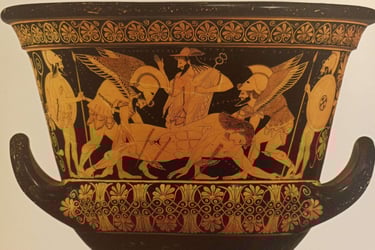
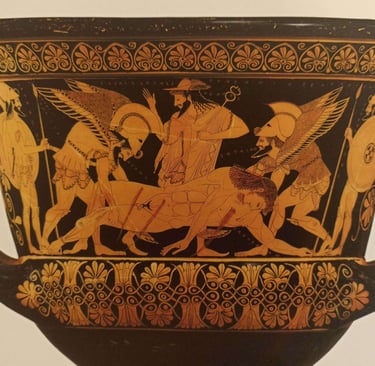
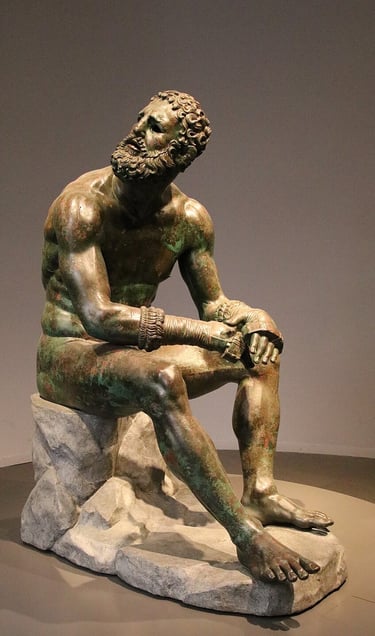
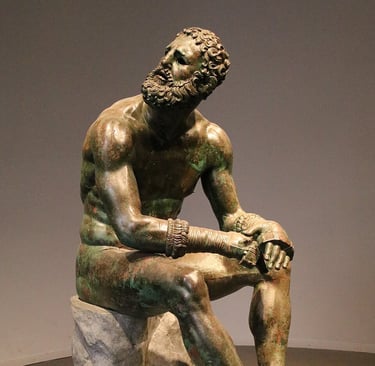
Ancient Greek sculpture presents the male body as balanced: proportioned, composed, and seemingly self-contained. Even in moments of tension, the sculpted figure appears to be in control, arrested in an idealised instant of potential rather than collapse. This visual language has profoundly shaped Western ideas of bodily perfection, reinforcing the belief that form is both attainable and stable. The lived experience of the ancient body—exposed, trained, fatigued, and wounded—was in stark contrast to its marble counterpart.
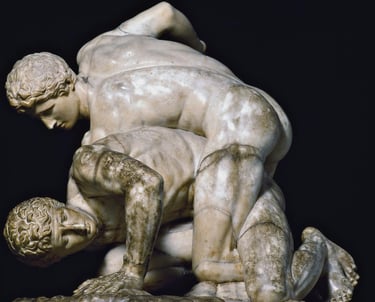
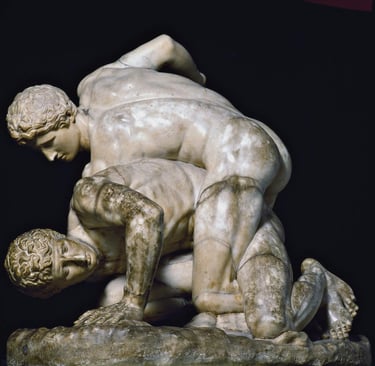
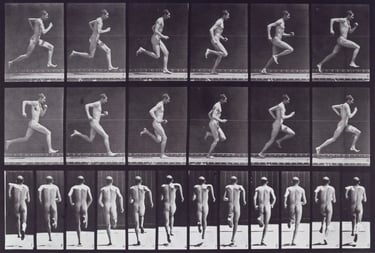
Pankration occupies this dissonance. As a combat practice, it rejects the logic of representation. In a chokehold, there is no ideal posture, and there is no heroic symmetry during the moment of submission. The body folds, contorts, and fails. In this sense, pankration does not merely depict the body; it actively resists being considered an image. The fighter’s concern is not how the body appears, but whether it endures. Visibility becomes secondary to survival.
This refusal of the image is crucial. Art historian Richard Neer has argued that classical form functions as a stabilising device—a way of containing the volatility of the human body within intelligible limits. (Neer, 2010) Pankration, by contrast, exposes what form seeks to conceal: imbalance, panic, and vulnerability. The combat arena becomes a space where the body exceeds aesthetic legibility. It cannot be read; it can only be experienced.
Such moments reveal a deeper truth about identity. When the body is pushed to its limits, the symbolic frameworks that normally define the self—status, reputation, even name—lose their authority. What remains is a corporeal presence stripped of narrative. Michel Foucault’s analysis of the disciplined body helps illuminate this condition. While ancient athletics were embedded within systems of training and regulation, pankration marks a threshold where discipline collapses into exposure. (Foucault, 1977) The body, no longer governed by representation, becomes a site of raw immediacy.
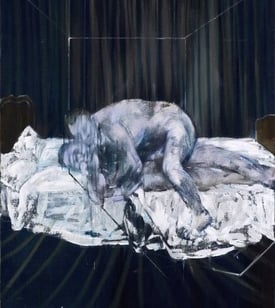
Pan’s presence is felt precisely here. Pan's presence is felt not as a figure watching from the margins, but as a force within the body itself. Panic is not fear imagined; it is fear enacted. It arrives when the body no longer obeys conscious intention, when breath shortens, muscles tighten, and reason recedes. In pankration, panic is not failure—it is revelation. It reveals the distance between the body's image and the body's lived experience.
For contemporary viewers, this refusal of the image resonates powerfully. Today's visual culture demands consistency, optimisation, and legibility. Bodies are curated through training, filtered through screens, and disciplined into recognisable forms of identity. Yet practices that foreground exhaustion, impact, and risk—whether in combat sports or performance art—continue to attract fascination precisely because they fracture this visual order. They expose the body where it resists becoming a symbol.
Pankration reminds us that the body precedes its representation. Before it becomes art, before it signifies identity, the body persists as a material condition—unruly, responsive, and finite. This piece is not a nostalgic return to antiquity but a confrontation with something unresolved in the present: the fear that beneath our carefully constructed images lies a body that cannot be fully controlled.
References